Moving from Argentina to Miami has a few quirks you will not find in general guides: your appliances will not work the same because the power supply is different, you cannot leave the country with $10,000 or more in cash, and Argentina and the U.S. have no tax treaty to avoid double taxation. On the other hand, bringing your dog is simpler than from other countries in the region, and most documents can be apostilled online. We walk through each step using official sources from both countries (ARCA, SENASA, the Foreign Ministry, U.S. Customs and the CDC) so you can plan your move without surprises.
What to bring and how to ship it
From Argentina, distance matters: a container takes considerably longer to arrive than from the Caribbean or Colombia, and the cost goes up. That is why many families bring only what has value or meaning (clothes, documents, photos, artwork, a few good pieces of furniture) and buy the rest in Miami. There are three common ways to ship it:
- Full container by sea: a 20- or 40-foot container just for you, for a whole home. It usually leaves from the port of Buenos Aires and arrives at PortMiami or Port Everglades.
- Consolidated sea freight: your boxes share a container with other customers' goods. You pay by volume, so it works out cheaper for a small move, but it takes longer.
- Air freight: the fastest and most expensive per kilo, for a few boxes you need from day one.
Get at least three written quotes based on the same inventory, and ask what each includes: packing, customs paperwork in both countries, insurance, door-to-door delivery and storage.
Leaving Argentina: your belongings tax-free
According to ARCA's procedures guide, personal effects and household goods can leave Argentina without paying taxes when you move abroad, under these conditions:
- They must be for your personal or family use, in reasonable quantities and not for commercial purposes, whether new or used. The tools of your trade can also go.
- You have to show that you are settling in another country, for example with your visa, residency or an employment contract.
- You apply with a written request at the relevant customs office, which classifies the traveler, inspects the goods and releases them. Hiring a customs broker (despachante) is not mandatory; if you use one, they need a notarized power of attorney.
- If you later return to Argentina, you cannot use this exemption again for one year.
In practice, the moving company usually coordinates this step with a customs broker. Ask which documents they will need from you and how far in advance.
U.S. customs: your furniture duty-free
On arrival, federal rules let you bring household furnishings and effects duty-free if they meet three conditions:
- You have used them abroad for at least one year. The year does not have to be continuous or right before the move, and family use counts if you lived in that household during that time.
- They are not for another person or for sale.
- You declare them. If they arrive separately, in a container or by air freight, you use CBP Form 3299, with a detailed inventory. Your moving company or its U.S. customs broker files it with you.
New items, items you bring to sell and anything that does not meet the one-year rule may be dutiable. Food, plants, seeds, untreated wood, alcohol and tobacco have their own rules: tempting as wine and dulce de leche may be, do not pack them in the container, and clean garden furniture, bicycles and outdoor shoes well, because soil is inspected too.
How to choose a moving company
In the U.S., companies that arrange international ocean shipments must be licensed or registered with the Federal Maritime Commission (FMC). The FMC advises against handing your belongings or money to any company that is not, and publishes a search tool to check. The most common complaints it receives are deliveries that never arrive, damage or loss, long delays and charges that go up once the cargo is on its way.
- Check the license in the FMC search tool using the exact name of the company or its U.S. partner.
- Get the quote in writing, all-inclusive, and be wary of a price far below the others.
- Buy cargo insurance and understand what it covers.
- Photograph everything before packing and keep a copy of the signed inventory.
Power: 220 versus 120 volts
This is the detail that surprises Argentines most on arrival. Argentina's grid runs at 220 volts and 50 Hz, with angled flat-pin plugs; the U.S. runs at 120 volts and 60 Hz, with a different plug. Before packing, check the label on each device:
- If it says "100-240 V, 50/60 Hz," like most phone and laptop chargers, it works in the U.S. with a simple plug adapter.
- If it says only "220 V," like many hair dryers, irons, kettles, coffee makers or kitchen appliances, you would need a transformer. It is rarely worth it: sell them and buy here.
- Large appliances, such as refrigerators, washing machines or air conditioners, are not worth bringing: besides the voltage, the frequency difference affects their motors.
If you travel with a dog or cat
Good news: Argentina is not on the CDC's list of high-risk countries for dog rabies, so the requirements are simpler than from Colombia or Venezuela. For a dog, according to SENASA and the CDC:
- It must be over 6 months old and have a microchip compatible with ISO 11784/11785.
- You complete the CDC Dog Import Form online. The receipt is valid for six months, as long as the dog does not visit a high-risk country, and is shown to the airline and on arrival. You also sign a declaration about cleaning the dog and its bedding on arrival.
- A licensed veterinarian issues the health certificate and the screwworm-free certificate within the 5 days before departure.
- With those certificates and a current rabies vaccination, SENASA issues the International Veterinary Certificate, also within those 5 days.
For a cat, the U.S. has no federal rabies requirements, but SENASA still requires the veterinary certificate for it to leave the country, and the airline will have its own rules. If your trip connects through a high-risk country, such as Brazil, check with the CDC whether the requirements change.
Your money: cash and transfers
- Leaving Argentina: under ARCA General Resolution 5659/2025, each traveler may leave with foreign currency cash totaling less than $10,000, or half that for children under 16. To take out more, it has to go through an authorized financial institution, not in your suitcase. Pesos above that equivalent are declared on Form OM 2250-B. Not complying can mean the money is withheld and a fine.
- Entering the U.S.: if you carry more than $10,000 in cash and other instruments, you must declare it to CBP on FinCEN Form 105. It is not a tax, just a report.
- Transfers: since the currency controls (the "cepo") were lifted in April 2025, individuals can buy dollars and transfer them abroad with far fewer restrictions, although the bank may ask for sworn statements. Open your U.S. account first (we explain how in opening a bank account without an SSN) and compare the total cost, exchange rate included.
- Document the source: if you sell an apartment or a car, or withdraw savings, keep the deed, receipts and statements. Your U.S. bank may ask you to show where the money comes from.
Taxes: tax residency and double taxation
This is the point that most needs planning ahead:
- No treaty: the U.S. and Argentina do not have an income tax treaty to avoid double taxation. If you keep income or assets in Argentina, such as a rental or investments, both countries may want to tax them.
- Ending Argentine tax residency: under Argentina's income tax law, you lose tax residency when you obtain permanent residency in another country, from the first day of the following month, or after staying outside Argentina for 12 consecutive months. Keep the documents that prove it, because ARCA can reject the change if you do not have them.
- In the U.S.: if you become a tax resident, you report your worldwide income each year, and your foreign accounts may carry their own reporting obligations.
Talk to an accountant in each country before you move, especially if you will keep assets in Argentina.
Documents and apostilles
Carry the originals in your hand luggage and scan everything before you leave. Argentine documents are apostilled to be valid in the U.S.:
- Online, through TAD: the Foreign Ministry apostilles electronic public documents with a digital signature through Trámites a Distancia. You need to be over 18, have a level 2 or higher tax ID password (clave fiscal) and an Argentine bank account linked to it. The fee is 4,500 pesos and it takes about 30 business days. You can do it from abroad.
- In person: at your province's Colegio de Escribanos (notaries' association), or at an Argentine consulate if you are already abroad.
What to bring apostilled or in order: valid passports with your visa; birth and marriage certificates; university degrees and transcripts, with an English translation if you will have them recognized; your children's vaccination records, which Florida schools require for enrollment; your driver's license and, if possible, bank reference letters, which help you rent without a U.S. credit history. As from any country, the car is rarely worth bringing; once you settle, you have 30 days to get a Florida driver's license.
Moving timeline
| When | What to do |
|---|---|
| 3 to 6 months before | Talk to an accountant about your tax residency. Apostille your documents. Decide what to bring and get three quotes. |
| 2 to 3 months before | Hire the company after checking its FMC license. Check the voltage of your devices. Choose an area and a home in Miami. |
| 1 month before | Prepare the paperwork for exporting your household goods and the inventory for Form 3299. Open your U.S. account and plan the transfer. |
| 5 days before | If you travel with a dog or cat, veterinary certificates and SENASA's International Veterinary Certificate. |
| On arrival | Follow our guide to your first 90 days in Miami: car insurance and registration, driver's license, schools and flood insurance. |
Where Argentines live in Miami
According to the Census Bureau's ACS survey, Argentines make up 1.3% of Miami-Dade's population, but they are concentrated in a few areas:
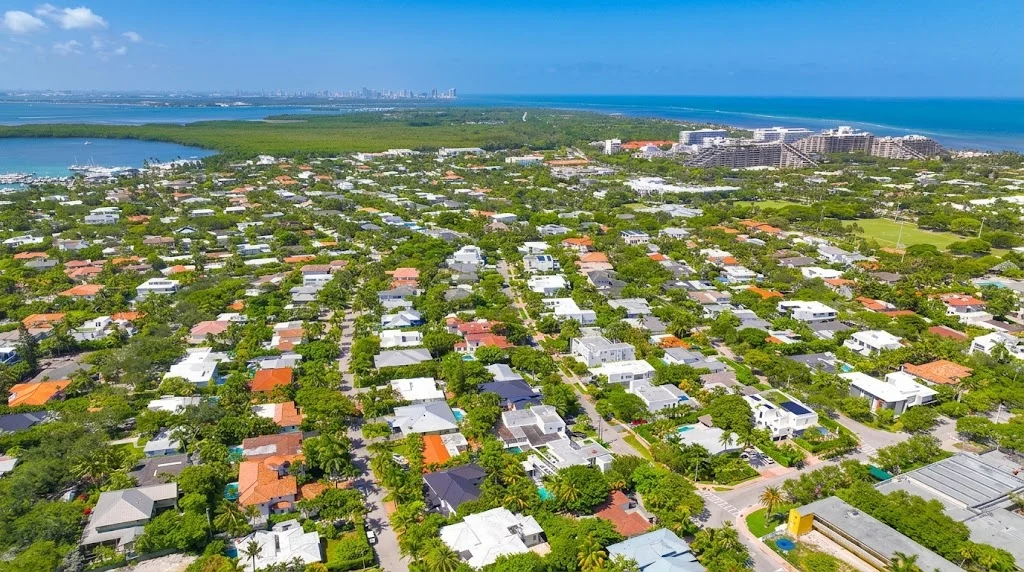
- Key Biscayne: 12.0% of the population, the largest Argentine concentration in the area.
- Aventura: 6.4%.
- Miami Beach: 5.0%.
- Weston, in Broward County: 3.8%.
- Sunny Isles Beach and Brickell: 3.4% each.
To compare rent, schools and flood risk in each area, start with our guide to Miami neighborhoods.
Frequently asked questions
How much cash can I take out of Argentina?
Less than $10,000 per person in foreign currency, or half that for children under 16. To take out more, the money has to go through an authorized financial institution, for example by transfer.
Do Argentine appliances work in Miami?
Only those rated for 100-240 volts, like most chargers, with a plug adapter. Those that run only on 220 volts need a transformer, and large appliances are not worth bringing.
What does my dog need to travel from Argentina to the U.S.?
To be over 6 months old, a microchip, the CDC form, a current rabies vaccination, health and screwworm-free certificates issued in the 5 days before travel, and SENASA's International Veterinary Certificate.
Is there a double taxation treaty between Argentina and the U.S.?
No. That is why it pays to plan with an accountant when you stop being an Argentine tax resident and how to report any income or assets you keep there.
Do I have to pay taxes to take my furniture out of Argentina?
No, if it is for personal or family use, not for commercial purposes, and you show customs that you are settling abroad. On entering the U.S., it is also duty-free if you have used it for at least one year and declare it on CBP Form 3299.
Method note
Cash exit rules come from ARCA General Resolution 5659/2025, and household goods rules from its moving procedures guide. Pet requirements come from SENASA and the CDC, using the high-risk country list in force in October 2026. Apostille information comes from the Foreign Ministry's official guidance. Loss of tax residency comes from Article 117 of Argentina's income tax law, and the absence of a tax treaty from the IRS list of treaties. U.S. customs rules come from the federal regulation on household effects (19 CFR 148.52) and CBP Form 3299. Shares of the Argentine-origin population come from the U.S. Census Bureau's American Community Survey (2020-2024 five-year average). Data reviewed in October 2026. This guide is general information, not legal, immigration, customs or tax advice.
Sources
- iProfesional: ARCA rules for leaving Argentina with cash (RG 5659/2025)
- iProfesional: ARCA changes to cash entering and leaving the country
- ARCA: Guía de trámites, mudanzas de importación y exportación
- SENASA: Viajar con mascotas a Estados Unidos
- Gobierno de Argentina: Apostillar un documento
- Quinterno Fidanza: Residencia fiscal en Argentina (March 2026)
- IRS: United States income tax treaties, A to Z
- eCFR via Cornell LII: 19 CFR 148.52, household effects used abroad
- U.S. Customs and Border Protection: CBP Form 3299 (PDF)
- U.S. Customs and Border Protection: Money and other monetary instruments
- CDC: High-risk countries for dog rabies
- Federal Maritime Commission: Household goods and personal property shipping practices
- U.S. Census Bureau: American Community Survey 5-year estimates (2020-2024)