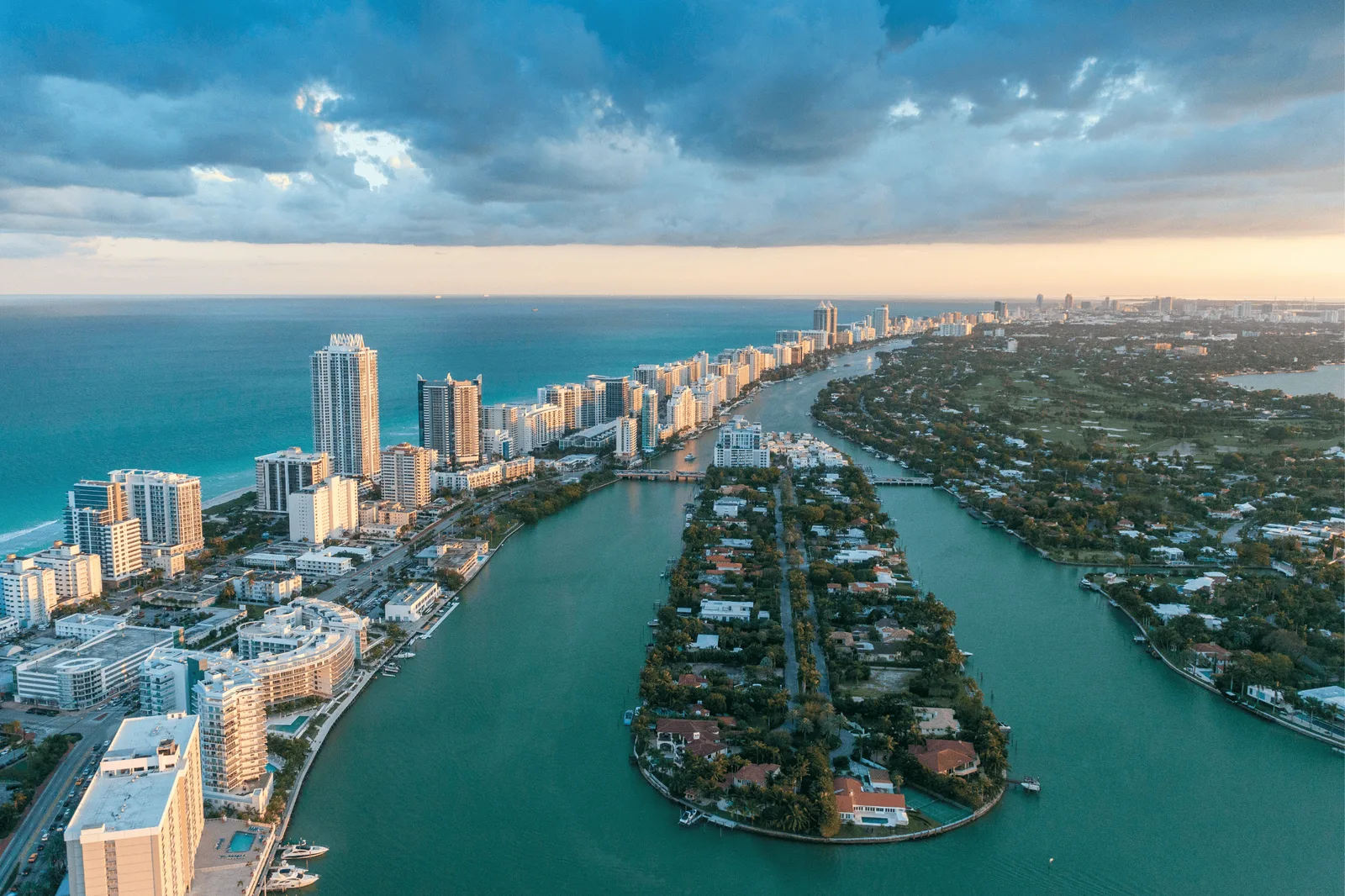
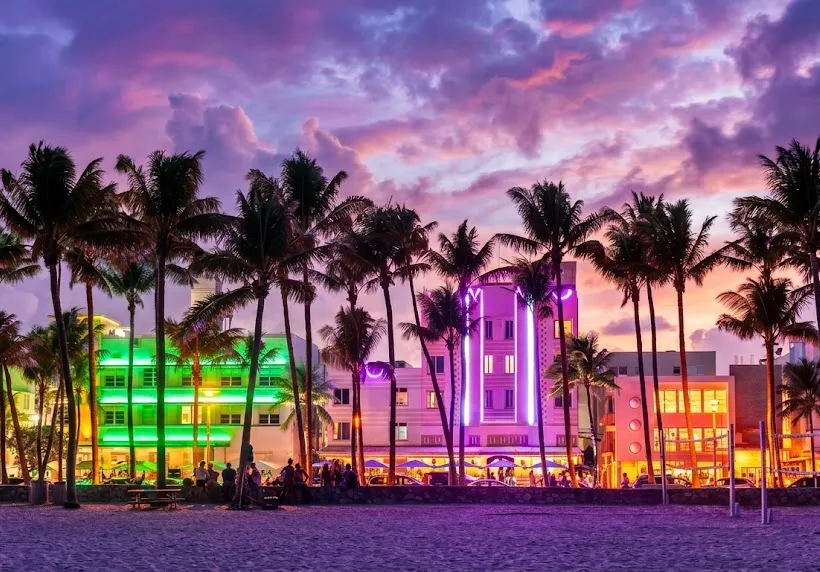
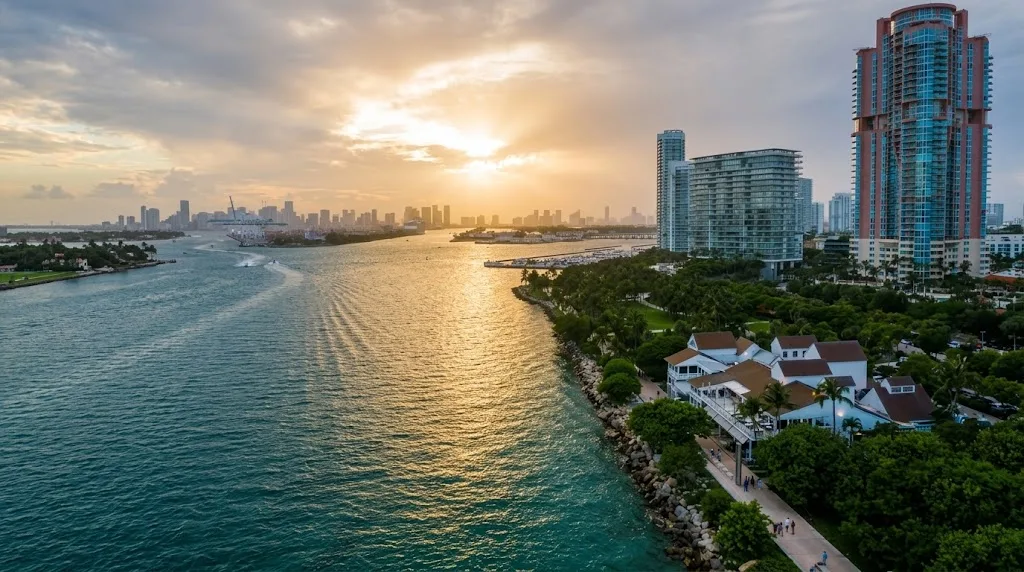
Miami Beach is Miami's postcard: white sand, colorful lifeguard stands, Art Deco hotels lit up at dusk and a seaside path more than seven miles long. But behind the postcard is a city where people live all year, with schools, parks, markets and neighbors who bike to work or ride the free trolley. Here is what it is like to live in Miami Beach, from South Beach to North Beach, and, with official data, what it costs, how its schools perform and what you really need to know about water.
What is Miami Beach like in numbers?
Miami Beach is an independent city with its own government, so we use its official Census boundary. Figures come from the Census Bureau (American Community Survey, 2020-2024 average) unless otherwise noted.
| Metric | Miami Beach | Miami-Dade |
|---|---|---|
| Population | 82,031 | 2,738,356 |
| Residents per km² of land | 4,120 | 557 |
| Median gross rent per month | $1,826 | $1,829 |
| Median value of owner-occupied homes | $556,700 | $463,000 |
| Median household income | $72,856 | $71,753 |
| Households earning more than $200,000 a year | 17.8% | 11.6% |
| Owner-occupied households | 40.9% | 52.2% |
| Adults with a bachelor's degree or higher | 52.9% | 34.4% |
| Foreign-born residents | 52.9% | 54.5% |
| Speak Spanish at home | 51.8% | 66.7% |
| Under 18 | 15.1% | 20.0% |
| People per household | 1.95 | 2.76 |
| Average commute | 26.7 min | 30.9 min |
| Households without a car | 22.6% | 9.8% |
| Homes in buildings with 20+ units | 65.4% | 33.8% |
| Median year built | 1969 | 1980 |
| Renters spending over 30% of income on rent | 57.9% | 60.9% |
| Land in a high-risk flood zone (FEMA) | 95.1% | 33.8% in the City of Miami |
These are five-year medians: current listings are usually higher, especially on the ocean. We explain each figure in the method note.
What is it like to live in Miami Beach?
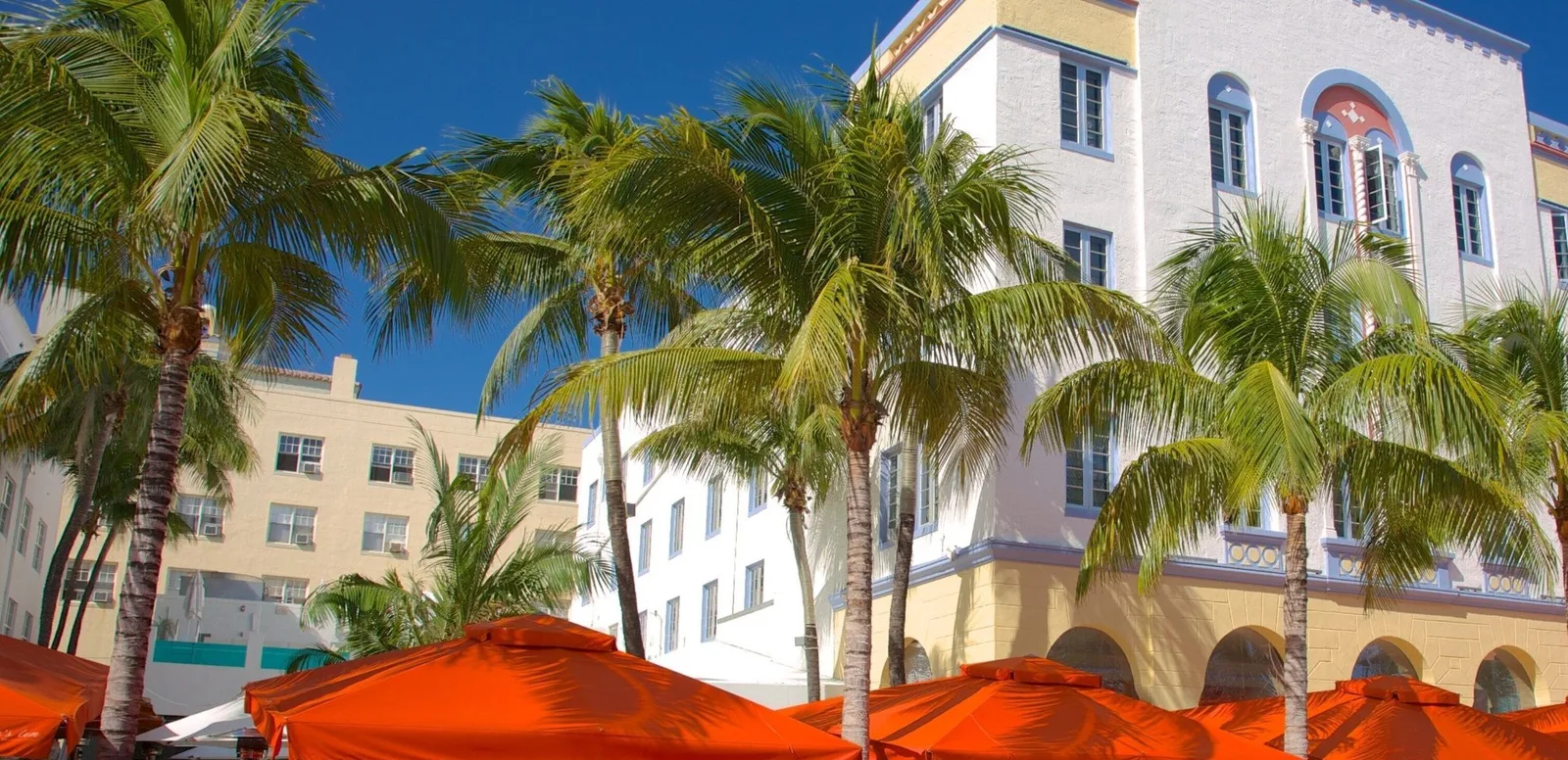
A little over a century ago, Miami Beach was a strip of mangroves and coconut palms. Farmer John S. Collins, businessman Carl Fisher and the Lummus brothers saw its potential; the Collins Bridge, finished in 1913, linked it to the mainland for the first time, and on March 26, 1915, its few dozen residents voted to become a city. In the 1930s and 1940s it filled with small Art Deco hotels, and in 1979, after a residents' campaign led by Barbara Capitman, South Beach became the nation's first urban 20th-century historic district on the National Register of Historic Places, with about 800 protected buildings.
Today Miami Beach is less one neighborhood than several. South Beach, in the south, is the postcard: Ocean Drive, the Art Deco district, Lincoln Road and the nightlife. Mid-Beach is quieter and more residential, with large hotels along Collins Avenue and homes on Indian Creek. North Beach is the most relaxed and, generally, the most affordable, with MiMo-style buildings, North Beach Oceanside Park and the Normandy Isles.
It is a city of small households, with fewer than two people per household on average and many adults living alone or as couples, although there are families too, especially in Mid-Beach and North Beach. Half of residents were born outside the U.S. and half speak Spanish at home. Cubans are the largest group by origin, and there is a notable Argentine community: at 5% of the population, it is almost four times its share of the county as a whole.
What is there to do in Miami Beach?
Where to eat
Miami Beach has three MICHELIN-starred restaurants in the 2026 guide, and another just to the north in Surfside:
- Stubborn Seed, chef Jeremy Ford's contemporary American restaurant at the southern tip of South Beach, with one MICHELIN star.
- Tambourine Room by Tristan Brandt, an 18-seat dining room with a French tasting menu with Asian influences, in North Beach, with one MICHELIN star.
- The Surf Club Restaurant, in the neighboring town of Surfside, also with one MICHELIN star.
- Lucali, wood-fired pizza in Sunset Harbour, with a Bib Gourmand, MICHELIN's award for good value.
- Joe's Stone Crab, opened in 1913 by Joe Weiss as a small lunch counter and now an institution, famous for its stone crab claws.
Beyond these names, the city is full of cafés, Latin American kitchens and patios, from Sunset Harbour to North Beach. As always, check the MICHELIN Guide and recent reviews, because things change.
Outdoors and strolling
- The beach, public along the entire coast, with its colorful lifeguard stands, which have become a symbol of the city.
- The Beachwalk, a path of just over 7 miles along the dunes, from South Pointe Park to North Beach Oceanside Park, completed in 2022, for walking, running or cycling.
- South Pointe Park, at the southern tip of the island, with its pier, waterfront lawns and views of cruise ships leaving the port.
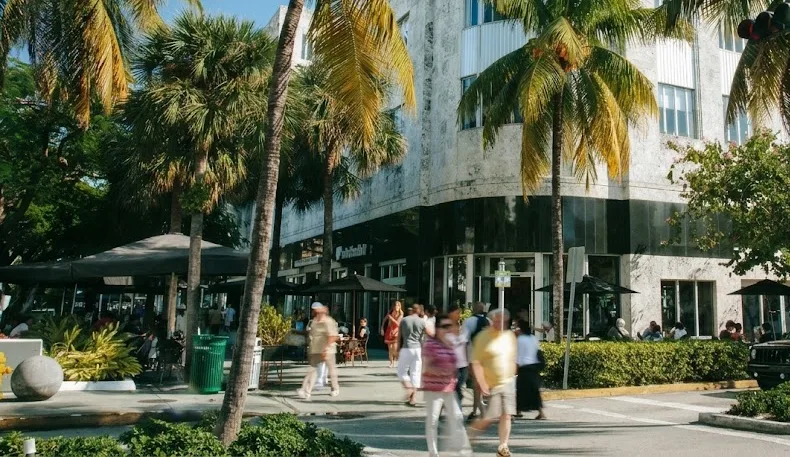
- Lincoln Road, the pedestrian street designed by Morris Lapidus and opened in 1960, with gardens, fountains, shops and patios, plus a Sunday farmers market.
For the weekend
- The New World Center, home of the New World Symphony, designed by Frank Gehry. In SoundScape Park next door, its concerts are projected for free on a 7,000-square-foot outdoor wall, with picnics on the lawn.
- Museums: The Bass, for contemporary art, in Collins Park, and The Wolfsonian–FIU, devoted to design, in the heart of the Art Deco district.
- Art Basel Miami Beach, the major December art fair, at the Convention Center. In 2026, the public days are December 4 to 6.
How much does it cost to live in Miami Beach?
Miami Beach is a city of apartments: two in three homes are in buildings with 20 or more units, and only one in ten is a single-family house, mostly on the bay islands, in Mid-Beach and in North Beach. The housing stock is old, with a median year built of 1969, and six in ten households rent.
- Buying: the median value is $556,700, but the range is huge, from a studio in a 1950s building in North Beach to a waterfront mansion. In an older building, ask for the mandatory structural inspections and the association's reserve study, because a special assessment can be costly, and check whether the building allows short-term rentals: the city restricts vacation rentals in many of its residential areas. We explain it in our guide to buying property in Miami.
- Renting: the median rent is $1,826 a month, in line with the county and well below Brickell ($3,124), although oceanfront and new buildings cost considerably more. If you have no credit history, read how to rent in Miami without a credit history.
Current price: According to Zillow, in September 2026 the typical value of a house in Miami Beach was $2,457,000 (+7.8% over a year) and of a condo, $460,000 (+1.7%). We compare it with other areas, along with rent and flood insurance, in Miami home prices by area, updated every month. Work out what it would cost you to live here →
How good are the schools in Miami Beach?
Miami Beach has 6 public schools graded by the Florida Department of Education. In 2026, 4 earned an A, 1 a B and 1 a C:
| School | Grades | 2026 grade |
|---|---|---|
| Miami Beach South Pointe Elementary | PK-5 | A |
| North Beach Elementary | PK-5 | A |
| Biscayne Beach Elementary | PK-5 | A |
| Miami Beach Nautilus Middle | 6-8 | A |
| Miami Beach Senior High | 9-12 | B |
| Miami Beach Fienberg/Fisher K-8 Center | PK-8 | C |
According to the county registry, there are also 2 charter schools and 24 private schools, including several Jewish and Catholic schools and Montessori programs.
How do you get around Miami Beach?
- On foot and by bike: the city is flat and narrow, and much of daily life happens on foot. The Beachwalk and bike lanes let you cross it without a car.
- Free trolley: the city runs five free routes, including the Collins Express from Lincoln Road to 88th Street, daily, generally from 8 a.m. to 11 p.m. and every 15 to 20 minutes.
- To the mainland: there is no Metrorail. You cross the bay on the causeways by car or county bus, and at rush hour traffic toward downtown and Brickell can be heavy.
- Car: 22.6% of households live without a car, more than twice the county rate. If you have one, parking in South Beach is expensive and scarce; ask whether the building includes a space.
Is Miami Beach safe?
The FBI has no recent full year of data from the Miami Beach police, which changed how it reports in 2024, so we do not give a figure. As in any tourist area, theft from visitors is the most common problem: keep an eye on your belongings at the beach and in nightlife areas.
Within each area, risk changes from one street to the next: visit by day and by night before deciding. Compare it with other areas in Miami crime rates by area.
Does Miami Beach flood?
This is the most important section of this guide. Miami Beach is a low-lying barrier island, and water is part of daily life:
- Flood zone: according to FEMA's current map, 95.1% of the land is in a high-risk zone, almost all of it in zone AE and 2.2% in zone VE, the wave-action zone on the oceanfront. In practice, flood insurance is close to essential across the city.
- High tides: in the fall, the year's highest tides can flood some low-lying streets even without rain. The city has spent years investing in stormwater pumps and in raising streets and seawalls, and conditions vary by area: ask neighbors about the specific street.
- Hurricane evacuation: 98.8% of the land is in storm surge zone B, and the rest is in zone A. If an evacuation is ordered, the way out is over the causeways, which get congested: have a plan and leave early.
Before renting or buying, look up the exact address on the FEMA flood map, ask for the flood disclosure required by Florida law, ask whether the home has flooded before and get an insurance quote before you sign.
What are the pros and cons of Miami Beach?
| Pros | Cons |
|---|---|
| The beach and the Beachwalk on your doorstep | 95% of the land in a high-risk flood zone |
| Walk, bike or ride the free trolley | No Metrorail and congested causeways to the mainland |
| Median rent in line with the county | Older buildings, with possible assessments and costly insurance |
| MICHELIN-starred restaurants, art and music | Tourism, noise and crowds in South Beach |
| Four A-rated public schools | Parking is expensive and scarce |
Who is Miami Beach right for?
A good fit if: you want to live by the ocean, like walking or cycling, don't mind apartment living, work remotely or in the city itself, and enjoy the atmosphere, culture and outdoor life.
Maybe not for you if: you want an affordable house with a yard, need to drive daily to Doral or the western county, want to avoid flood risk or prefer a quiet neighborhood without tourists.
Similar neighborhoods: if you like high-rise, car-free living closer to the office, read our Brickell and Edgewater guides; if you want the water with more green and calm, our Coconut Grove guide.
Curious about Miami's most exclusive side? Read how many millionaires live in Miami, with the data and its caveats.
Want to compare them all? Read our guide to Miami neighborhoods: where to live based on what you want.
FAQ
Is Miami Beach part of Miami?
No. It has been an independent city since 1915, with its own government and police, on a barrier island across Biscayne Bay from Miami. Both are in Miami-Dade County.
How much does it cost to rent in Miami Beach?
The Census median rent is $1,826 a month (2020-2024), in line with the county. Current listings are usually higher, especially on the ocean and in new buildings.
Which part of Miami Beach is best to live in?
It depends on what you want: South Beach to be at the center of nightlife and culture, Mid-Beach for something quieter and residential, and North Beach for lower prices and a neighborhood feel.
Does Miami Beach flood?
95.1% of the land is in a high-risk zone according to FEMA, and some low-lying streets flood during fall high tides. The city has invested in pumps and raised streets. Always check the exact address and budget for insurance.
Can you live in Miami Beach without a car?
Yes, more than almost anywhere else in Miami: 22.6% of households have no car, the city is flat and the trolley is free. Commuting daily to the mainland makes a car or the bus more necessary.
Method note
We use the official Census boundary of the City of Miami Beach. Population, housing, income, language, origin and commuting figures come from the U.S. Census Bureau's American Community Survey (2020-2024 five-year average). Density is our own calculation, on the boundary's land area, excluding water. The shares of land in flood and evacuation zones are our own calculations, overlaying that boundary with FEMA's current flood map and the storm surge zones published by Miami-Dade County, on land area. Schools are located using county open data, and school grades are the Florida Department of Education's official 2026 grades. Restaurant distinctions are from the 2026 MICHELIN Guide Florida.
Sources
- U.S. Census Bureau: American Community Survey 5-year estimates, 2020-2024 (Miami Beach city, Miami-Dade County)
- Florida Department of Education: 2026 School Grades
- Miami-Dade County Open Data: FEMA flood zones, storm surge planning zones and schools
- City of Miami Beach: The Incorporation of Miami Beach (March 26, 1915)
- Miami Design Preservation League: National Register of Historic Places listing
- City of Miami Beach: Beachwalk completion
- MICHELIN Guide: Every MICHELIN-starred restaurant in Florida for 2026
- MICHELIN Guide: Florida's Bib Gourmand restaurants in 2026
- Joe's Stone Crab: About Joe's
- Greater Miami Convention & Visitors Bureau: Miami Beach Trolley
- Greater Miami Convention & Visitors Bureau: New World Center
- Lincoln Road
- Art Basel Miami Beach 2026
- Urban Land Institute: Living with rising sea levels, Miami Beach plans for resilience
- FEMA: Flood Map Service Center