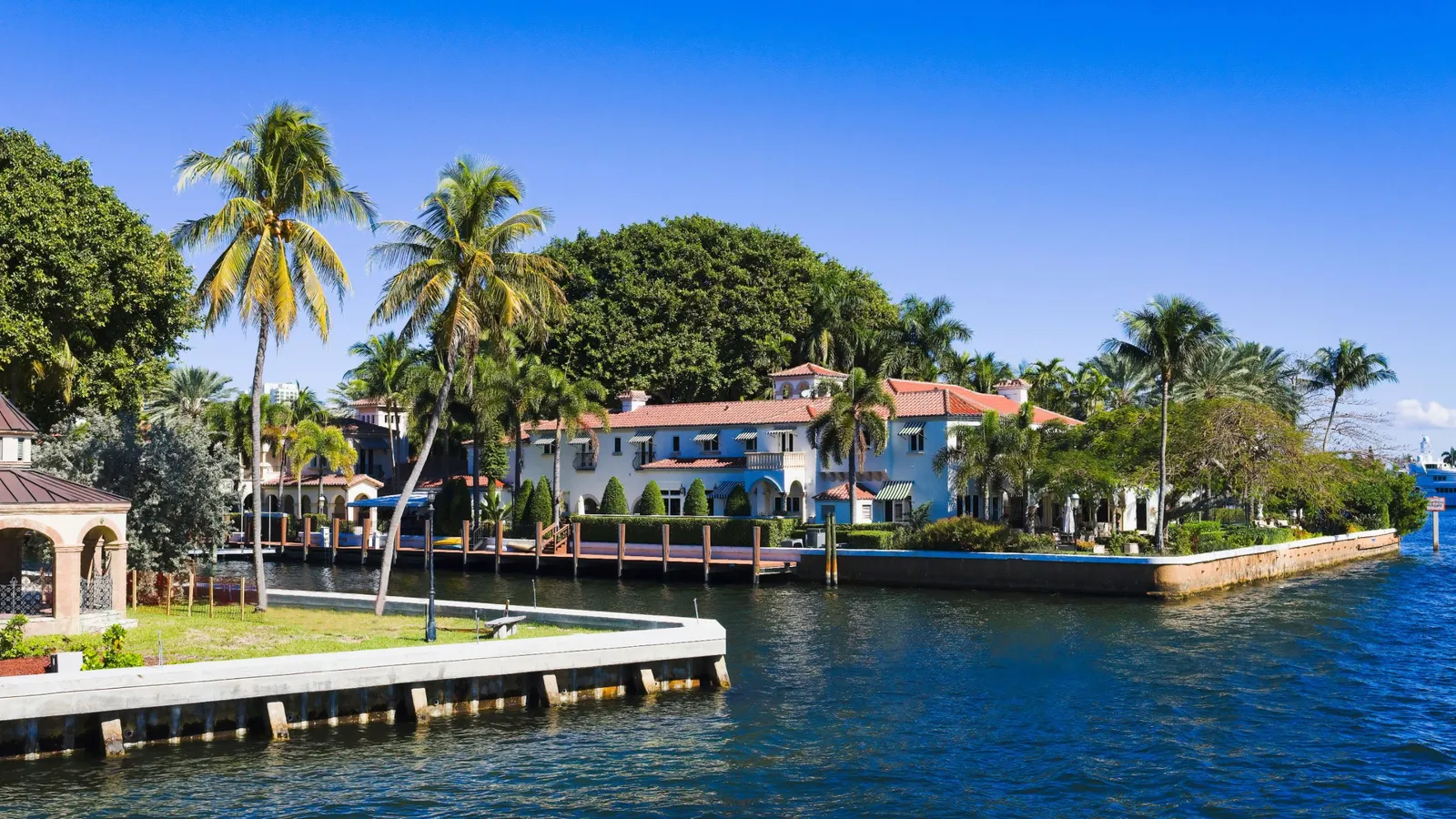
In the U.S. you don't need to be a citizen or resident to buy a home, and Miami is one of foreign buyers' favorite markets. But the process, the taxes and some Florida-specific rules differ from those in your home country. This guide explains, step by step and with official data, how buying works, what closing costs, what to check if it's a condo and which taxes apply if you rent it out or sell.
Prices updated every month: see the typical value of houses and condos, rent and flood insurance in each area in Miami home prices by area.
Can a foreigner buy?
Yes. You don't need to be a citizen, a permanent resident or hold a particular visa to buy a home in Florida. You don't need a Social Security number to sign the purchase either. What you will need is your passport, a way to move funds from a bank and, if you'll rent the home out or sell it later, an IRS tax number such as an ITIN.
Buying doesn't give you the right to live in the U.S.: property and immigration status are separate matters.
The exception: buyers from certain countries
The market in figures
According to the U.S. Census Bureau (American Community Survey, 2020-2024 average):
| Figure | City of Miami | Miami-Dade County |
|---|---|---|
| Median value of owner-occupied homes | $518,100 | $463,000 |
| Owner-occupied households | 30.8% | 52.2% |
| Median monthly owner costs with a mortgage | Not available | $2,451 |
| Median monthly owner costs without a mortgage | Not available | $815 |
The Census value is what owners themselves estimate, averaged over five years, so it isn't the same as today's listing prices, which are higher in many areas. What it does show well is the cost of keeping a home: even without a mortgage, the median Miami-Dade owner spends more than $800 a month on taxes, insurance, utilities and fees.
Whose name to buy in
The most common options are buying in your own name, alone or with someone else, or through a company, usually an LLC. Each option has different consequences for U.S. and home-country taxes, inheritance and financing: many banks won't lend to a newly formed LLC, for example. It's a decision to make with an accountant and an attorney before signing the contract, not after. If you're considering an LLC, start with our guide on how to open a Florida LLC.

Cash or mortgage
Many foreign buyers pay cash, which makes the purchase simpler and faster. If you need financing, some banks and lenders offer foreign national mortgages that don't require U.S. credit. Terms vary widely, but they generally ask for:
- a larger down payment than for a resident;
- proof of income and funds from your home country, often translated;
- reserves: funds available to cover several months of payments;
- a U.S. bank account. Our bank comparison helps you choose one.
Get a pre-approval letter before you start searching seriously: in Miami, many offers are accepted or rejected based on how solid the financing looks.
The process, step by step
- Set your full budget: price, closing costs, insurance, taxes and, for a condo, association fees.
- Choose a licensed real estate agent. Check their license in the official Florida license search.
- Make an offer. If the seller accepts, you sign a purchase contract and pay an escrow deposit, held by a third party, usually the title company or an attorney.
- Inspection and review. The contract usually gives you a set number of days to inspect the home and, for a condo, review its documents. That's when you can negotiate or walk away, depending on the contract terms. Also review the flood disclosure the seller must give you at or before signing the contract (section 689.302): it states whether the seller knows of flooding that damaged the home, filed an insurance claim or received assistance, for example from FEMA.
- Financing and appraisal, if you're using a mortgage.
- Title and title insurance. The title company confirms the seller owns the home and there are no liens on it, and issues title insurance.
- Closing. You sign, pay and get the keys. The deed is recorded with the county. If you can't be in Miami, you can sign remotely or through a power of attorney.

What closing costs
On top of the price, there are taxes and costs paid at closing. These are the taxes set by law, at the rates published by the Miami-Dade Clerk of the Court:
| Item | Miami-Dade rate | Based on |
|---|---|---|
| Deed stamp tax (documentary stamp tax) | $0.60 per $100 | The purchase price |
| Deed surtax | $0.45 per $100 | Only if it isn't a single-family residence. A condo unit counts as a single-family residence |
| Mortgage stamp tax | $0.35 per $100 | The loan amount |
| Intangible tax | 2 mills | The loan amount |
In the rest of Florida, the deed stamp tax is $0.70 per $100. On top of the taxes come other costs that vary by deal: title insurance, title company or attorney fees, recording, inspection, appraisal and lender fees. Who pays each item is negotiated in the contract.
If you're buying a condo
After the 2021 Surfside collapse, Florida tightened the rules for condominium buildings of three or more stories:
- Mandatory milestone inspection when the building turns 30, or 25 if the local authority requires it, for example because it's near salt water, and every 10 years after that (section 553.899).
- Structural integrity reserve study (SIRS) at least every 10 years, covering the roof, structure, waterproofing, windows and other components. Since 2025 budgets, the association can no longer waive those reserves (section 718.112).
In practice, many buildings have had to raise fees or approve special assessments for repairs. Before buying, ask for the inspection, the reserve study, the association budget and recent minutes, and ask whether any special assessments are approved or planned.
After you buy: taxes and costs
- Property tax. Paid yearly to the county, based on assessed value. The homestead exemption, which lowers assessed value and caps increases, is only for owners who make the home their permanent residence: in Miami-Dade, the property appraiser requires being a U.S. citizen or permanent resident and a Florida resident as of January 1. Without homestead, annual increases in assessed value are capped at 10%, except for school taxes.
- Homeowners insurance. In Miami it's one of the biggest costs, because of hurricane risk. The law requires insurers to give discounts for windstorm mitigation features, such as impact windows or shutters and good roof anchoring (section 627.0629), so ask for a wind mitigation inspection. If you can't find private coverage, there's Citizens Property Insurance, a State of Florida entity for people who can't get coverage in the market. If you have a mortgage, the lender will require insurance. We cover it in detail, with each neighborhood's risk, in our guide to home and flood insurance in Miami.
- Flood insurance. Standard homeowners policies don't cover floods. Check the risk zone on the FEMA flood map: if the home is in a high-risk zone and you have a mortgage, the lender will require separate flood insurance.
- Association fees, for a condo or a community with an association.
If you rent it out or sell
If you rent it out, rent earned by a non-resident is taxed in the U.S. By default, 30% of gross rent is withheld unless a treaty lowers it. You can also elect to treat it as business income by filing a return, which lets you deduct expenses. You'll need an ITIN and, almost certainly, an accountant.
If you sell, FIRPTA applies: the buyer generally must withhold 15% of the price and send it to the IRS as a prepayment of your tax. If your actual tax is lower, you can request reduced withholding with Form 8288-B and recover the difference when you file. There's one exception: nothing is withheld if the price is $300,000 or less and the buyer will live in the home.
Frequently asked questions
Do I need a visa to buy a house in Miami?
Generally not. The exception is people domiciled in China, Russia, Iran, North Korea, Cuba, Venezuela or Syria without U.S. citizenship or permanent residency, who face restrictions and need a non-tourist visa to use the residential exception.
Does homeowners insurance cover floods?
No. Standard homeowners policies don't cover flood damage, as the disclosure required by Florida law itself points out. You need separate flood insurance.
Does buying a home give me residency?
No. Buying a home doesn't give you any U.S. immigration status.
Can I get a mortgage without U.S. credit?
Yes, with a foreign national mortgage, although terms are usually stricter: a larger down payment, proof of income and reserves.
Can I buy remotely?
Yes. Signing can be done remotely or through a power of attorney. Still, it's wise to have someone you trust see the home and to hire a professional inspection.
Next step
Before buying, get the financial side ready: choose a bank with our bank comparison and, if you'll rent the home out, apply for your ITIN. And if you're interested in the high-end market, read Miami, city of millionaires.
Sources
- Florida Statutes 692.201: Definitions (foreign principals and countries of concern)
- Florida Statutes 692.203: Real property near military installations and critical infrastructure
- Florida Senate: Bill summary, SB 264 (2023)
- Miami-Dade Clerk of the Court: Documentary stamp and intangible tax rates
- Florida Statutes 201.02: Tax on deeds
- Florida Statutes 201.08: Tax on promissory notes and mortgages
- Florida Statutes 199.133: Nonrecurring intangible tax
- Florida Statutes 553.899: Milestone inspections
- Florida Statutes 718.112: Structural integrity reserve studies
- Florida Statutes 196.031: Homestead exemption
- Florida Statutes 193.1555: Assessment of certain residential property
- Miami-Dade Property Appraiser: Exemption requirements
- IRS: FIRPTA withholding
- IRS: Taxation of nonresident aliens
- U.S. Census Bureau: QuickFacts, Miami city and Miami-Dade County (ACS 2020-2024)
- Florida Statutes 689.302: Flood disclosure in the sale of residential real property
- Florida Statutes 627.0629: Windstorm mitigation discounts
- Florida Statutes 627.351: Citizens Property Insurance Corporation
- FEMA: Flood Map Service Center
- Atlantic Council: The US just captured Maduro (January 3, 2026)