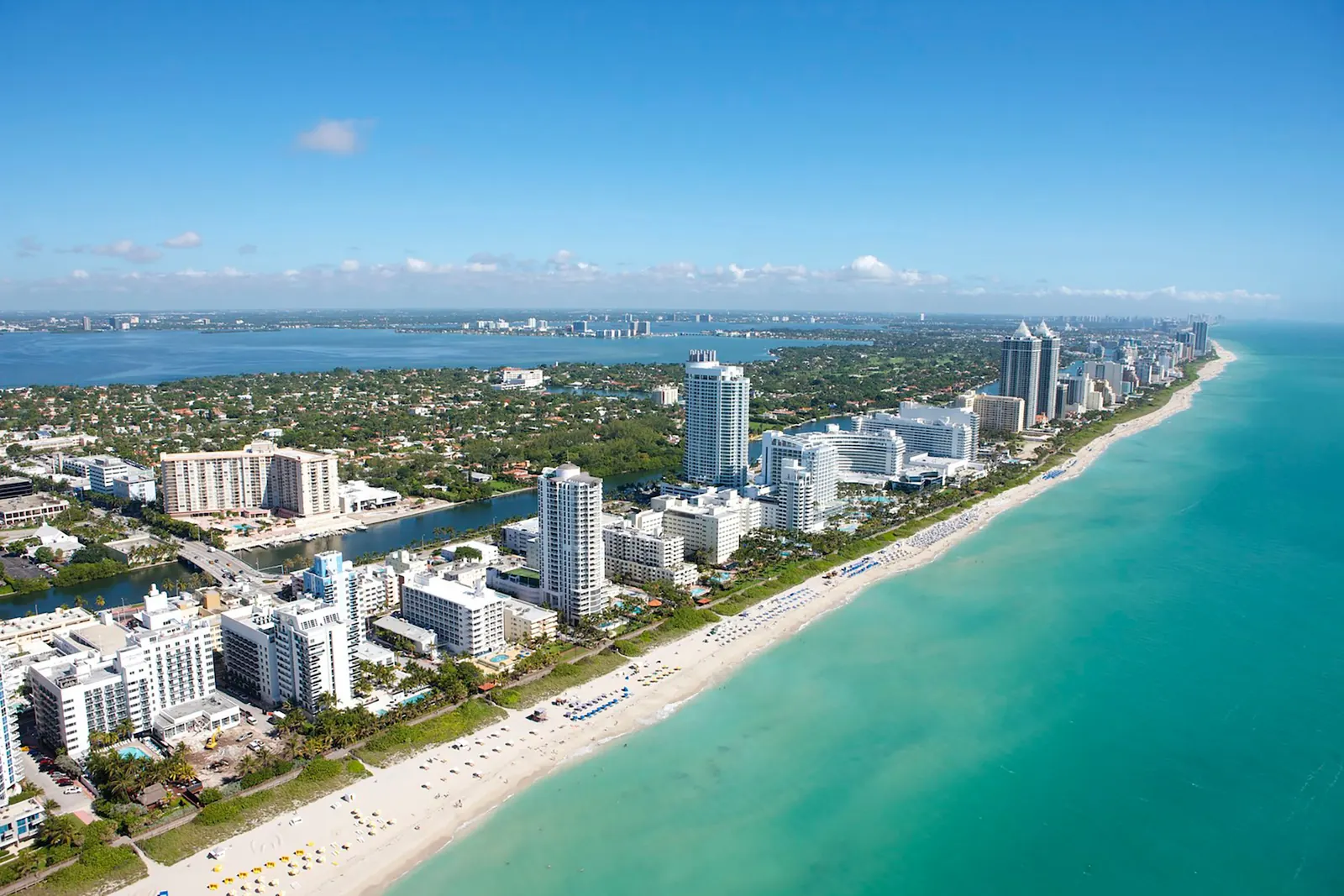
About 38,800 millionaires live in Miami, according to Henley & Partners: nearly 7 in every 100 residents. That's the highest share among America's wealthiest big cities, ahead of Boston, Seattle, New York and San Francisco. The figure is real, but it's almost always told wrong. Here's the full story: what it actually measures, why it happened and what it means for you if you're thinking of living, working or doing business in Miami.
The figure, told right
The number comes from the annual report on the world's wealthiest cities published by Henley & Partners with the research firm New World Wealth. In its April 2025 edition, with data through 2024, Miami ranks 32nd in the world with about 38,800 millionaires, counting Miami, Miami Beach and Coral Gables.
Those three cities have about 575,000 residents. That means about 6.7% of the population are millionaires, the highest share among the 11 U.S. cities in the ranking:
| City | Millionaire residents (%) |
|---|---|
| Miami | 6.7% |
| Boston | 6.6% |
| Seattle | 6.5% |
| Los Angeles | 5.8% |
| Dallas | 5.5% |
| New York | 4.5% |
| Chicago | 4.5% |
| San Francisco Bay Area | 4.4% |
| Washington, D.C. | 4.1% |
| Houston | 3.5% |
| Austin | 3.2% |
Shares calculated by Miami New Times from Henley & Partners data (World's Wealthiest Cities Report 2025).
Miami also has about 180 people worth more than $100 million and 17 billionaires, and its resident millionaire population grew 94% between 2014 and 2024.
Is Miami a rich city? Yes and no
Miami has an unusual concentration of millionaires, but most of its residents aren't rich. Census figures show a city of sharp contrasts: the City of Miami's median household income is below the national median, and its poverty rate is higher.
| Area | Median household income | Households earning $200,000+ | Poverty rate |
|---|---|---|---|
| City of Miami | $62,462 | 12.2% | 19.4% |
| Miami Beach | $72,856 | 17.8% | 14.4% |
| Coral Gables | $134,216 | 37.0% | 9.4% |
| Miami-Dade County | $71,753 | 11.6% | 14.7% |
| United States | $80,734 | 13.4% | 12.5% |
Source: U.S. Census Bureau, American Community Survey, 2020-2024 five-year estimates.
In other words, the wealth is highly concentrated. In Coral Gables, more than a third of households earn over $200,000 a year; in the City of Miami, almost one in five residents lives below the poverty line. Both are true at once, and that's what makes Miami so expensive for people who arrive without capital. Among the areas we've analyzed, the highest household incomes are in Pinecrest ($206,417) and Key Biscayne ($181,505).
How much do the richest 10% have?
There's no official figure for wealth by city: neither the Census Bureau nor the Federal Reserve publishes how much you need to be among Miami's richest 10%. The best reference is national: the Federal Reserve's Survey of Consumer Finances, whose 2025 edition was published in October 2026.
- The median U.S. family has a net worth of $215,900.
- The mean is $1.24 million, pulled up by the wealthiest families.
- Among the richest 10% of families, the median net worth is about $4.9 million.
Keep in mind that Henley & Partners measures something different: it counts as a millionaire anyone with at least $1 million in liquid investable assets, without counting real estate. Net worth, by contrast, includes homes and other property and subtracts debts, so the two figures aren't directly comparable.
What the headline leaves out
The figure holds up, but it comes with five caveats that almost nobody mentions:
- Miami is not the U.S. city with the most millionaires. In absolute numbers, New York has about 384,500, the Bay Area about 342,400 and Los Angeles about 220,600. Miami wins on share, not on count.
- The comparison covers 11 big cities, the ones in the global ranking. Some small, very wealthy U.S. towns likely have a higher share, but they aren't on that list.
- It wins by a hair. The gap with Boston (6.6%) and Seattle (6.5%) is minimal.
- It isn't the fastest-growing. Over the same period, the Bay Area grew 98%, West Palm Beach 112% and Scottsdale 125%.
- It measures liquid wealth, not property. It counts stocks, cash, bonds and crypto, but not real estate. And these are model estimates, not a census. Henley & Partners is also a residence and investment advisory firm: its study is widely cited, but it is not official statistics.
Engine 1: taxes and income migration
Florida's Constitution bars the state from taxing the income of resident individuals, and from taxing inheritances. For high earners in states like New York, California or Illinois, moving to Florida can mean significant tax savings. Federal taxes still apply as usual.
IRS data shows the effect. Between 2019 and 2023, Florida saw a net inflow of $137 billion in income from taxpayers moving in from other states, about $20.6 billion in the last year of that series alone. No other state comes close.
Taxes don't explain everything. Climate, lifestyle, the link to Latin America and, since 2020, the spread of remote work all play a part. But taxes are a clear engine.
Engine 2: finance moves south
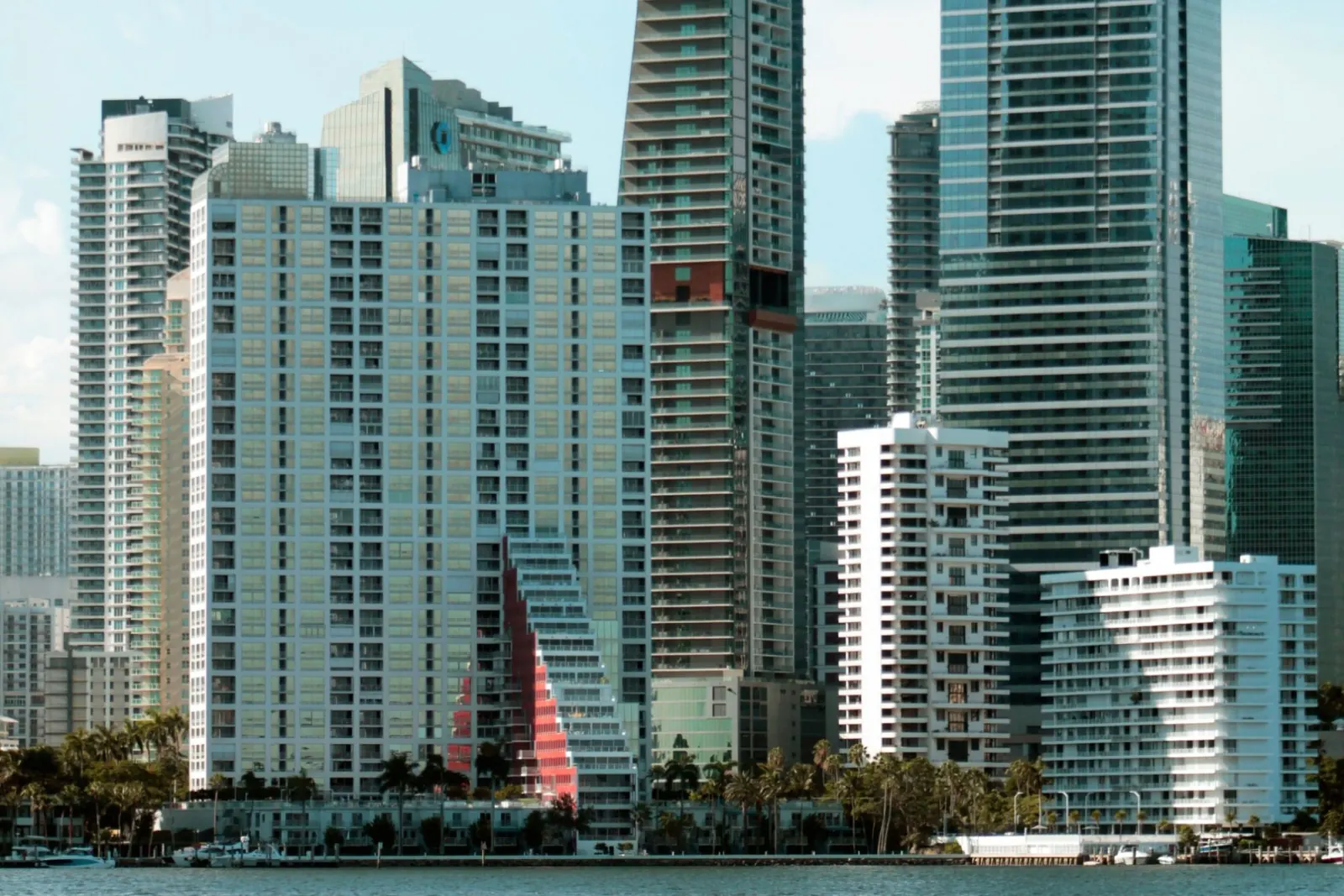
In June 2022, Citadel, one of the world's largest hedge funds, announced it was moving its global headquarters from Chicago to Miami, along with its sister company Citadel Securities. It now has about 500 employees in the city, Miami is its fastest-growing office, and it is building a roughly $2.5 billion headquarters designed by Norman Foster on Biscayne Bay.
It isn't alone. Firms such as Thoma Bravo, Palantir, ServiceNow, Wells Fargo's wealth management unit and McKinsey have opened or expanded offices in Miami, and Banco Santander is developing a 41-story tower in Brickell. That's why Miami is sometimes called “Wall Street South,” though New York remains far larger.
Engine 3: Latin American capital
Miami is the gateway for Latin American wealth into the United States. According to the MIAMI Association of Realtors, between August 2024 and July 2025:
- foreign buyers accounted for 15% of residential sales volume in South Florida, versus 2% nationwide;
- they bought about $4.4 billion in property, up 42% from the year before;
- the top countries of origin were Colombia (15%), Argentina (12%), Mexico and Brazil (7% each), and Venezuela and Canada (5% each);
- 51% paid cash.
Based on these figures, the association ranks Miami as the top U.S. market for foreign home buyers.
The flip side: living in an expensive city
Lots of millionaires doesn't mean Miami is easy to live in. According to an Atlanta Federal Reserve analysis published in October 2026, in the Miami area:
- a median-income household would need to spend 60% of its income to buy the median home, priced at about $534,000;
- to keep that purchase within 30% of income, it would need about $171,000 a year, nearly double the area's median income;
- nearly 60% of renters spend more than 30% of their income on rent, and more than a third spend over half;
- insurance, property taxes and HOA fees combined have risen 150% in ten years.
That's Miami's paradox: one of the country's greatest concentrations of wealth is also one of its hardest places to afford for those who don't have it.
What it means for you
If you're coming to work or start a business, a city with this much concentrated wealth demands high-value services, and many of its clients speak Spanish. A few examples:
- wealth management, accounting and international legal advice;
- real estate, property management and high-end renovation;
- hospitality, dining and private events;
- premium education, health and wellness;
- personal services: drivers, security, concierge, home care.
That said, competition is fierce and operating in Miami isn't cheap. If you're setting up a company, start with our guide on how to open a Florida LLC as a non-resident.
If you're coming to live, take your budget seriously: housing, insurance and transportation weigh more than in many other cities. Our guide to moving to Miami walks you through the paperwork and deadlines of your first 90 days.
If you're coming to invest, Miami real estate has strong international demand, but also rising carrying costs, expensive insurance and specific risks such as hurricanes. Surround yourself with licensed professionals before deciding.
Where Miami's wealth lives
Miami's wealth isn't spread evenly. These are the areas most associated with it:
- Brickell: the financial district, with office and condo towers on the bay.
- Miami Beach and its islands: from oceanfront towers to the residential islands in the bay.
- Coral Gables: a residential city of Mediterranean-style homes and tree-lined streets, included in the study's figures.
- Key Biscayne: a quiet residential island south of Brickell, linked to the city by a causeway.
- Bal Harbour and Sunny Isles Beach: luxury oceanfront towers north of Miami Beach.
- Fisher Island: a private island reachable only by ferry or boat.
Henley & Partners' figures only cover Miami, Miami Beach and Coral Gables, so some of these areas, such as Key Biscayne, Bal Harbour, Sunny Isles Beach and Fisher Island, fall outside the count.
FAQ
How many millionaires live in Miami?
About 38,800, counting Miami, Miami Beach and Coral Gables together, according to Henley & Partners' 2025 report. That's roughly 6.7% of residents. The report counts people with at least $1 million in liquid investable wealth, such as stocks, cash or bonds, not counting real estate.
Is Miami a rich city?
Yes and no. It has the highest share of millionaires among big U.S. cities, but the City of Miami's median household income ($62,462) is below the national median ($80,734), and 19% of its residents live below the poverty line, according to the Census Bureau.
How many billionaires live in Miami?
About 17, according to Henley & Partners' 2025 report, along with about 180 people worth more than $100 million.
How much do the richest 10% have in the U.S.?
According to the Federal Reserve's 2025 Survey of Consumer Finances, the median net worth of the richest 10% of U.S. families is about $4.9 million. There's no official figure for Miami alone.
Is Miami the U.S. city with the most millionaires?
Not in total: New York, the Bay Area and Los Angeles have far more. Miami has the highest share of millionaires among the 11 big U.S. cities in Henley & Partners' ranking.
Is Miami the 3rd richest city in the world?
No. In Henley & Partners' 2025 ranking of the world's wealthiest cities by number of millionaires, Miami is 32nd, with about 38,800. What stands out is the share: it has the highest proportion of millionaires among the 11 U.S. cities in that ranking.
Is it the city where millionaires are growing fastest?
No. It grew 94% between 2014 and 2024, but over the same period the Bay Area grew 98%, West Palm Beach 112% and Scottsdale 125%.
Does it count home values?
No. The study measures liquid investable wealth: stocks, cash, bonds and crypto. A millionaire, in this study, is someone with at least $1 million in those assets, not counting their home.
Are there no taxes in Florida?
Florida has no state personal income tax or inheritance tax, but federal taxes apply, as do sales tax (7% in Miami-Dade) and property tax. Every tax situation is different: talk to an accountant.
Can you live in Miami without being rich?
Yes, and that's how most residents live, but housing costs are high relative to income. Before moving, compare real rents in the areas you like and factor in insurance and transportation.
Next step
Miami concentrates wealth, opportunity and high costs. To make the most of the first without being caught off guard by the last, arm yourself with good information and the right professionals. That's exactly the network of independent professionals we're building at inMiami.ai, in English and Spanish.
Sources
- U.S. Census Bureau: American Community Survey 5-year estimates (2020-2024)
- Federal Reserve: 2025 Survey of Consumer Finances (press release, October 2026)
- Federal Reserve: Changes in U.S. Family Finances from 2022 to 2025 (PDF)
- Henley & Partners: World's Wealthiest Cities Report 2025 (press release)
- Miami New Times: Cities with most millionaires per capita, Miami tops U.S. list
- Florida Constitution, Article VII, Section 5 (via Florida Court Rules)
- MIAMI REALTORS: Palm Beach County #1 in net inflow of income from domestic migration (IRS data)
- Florida Realtors: IRS data shows income migration continues to favor Florida
- Commercial Observer: Financial giant Citadel moving global HQ to Miami
- Fortune: Hedge fund billionaire Ken Griffin is betting Miami can rival New York
- MIAMI REALTORS: Miami is #1 U.S. market for foreign home buyers
- MIAMI REALTORS: 2025 International Report (PDF)
- Federal Reserve Bank of Atlanta: Researchers seek answers to South Florida's home affordability strains
- Florida International University: Florida and Miami-Dade sales tax rates