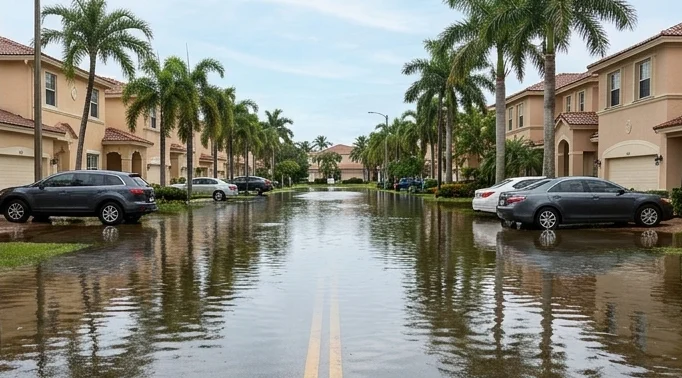
In Miami, home insurance weighs almost as much in the decision as the price: it is one of the highest fixed costs, and what it does not cover can be very expensive after a hurricane. The most common trap is assuming homeowners insurance covers flooding: it almost never does. In this guide we explain, with official sources, how home, flood and hurricane insurance work in Florida, what changes on January 1, 2027 and the real risk in each neighborhood, using our own calculations on the FEMA map.
Which policy you need: owner, condo or renter
| Situation | Typical policy | What it covers | What to check |
|---|---|---|---|
| House you own | Homeowners (HO-3) | The structure, your belongings and your liability | Whether it includes wind, the hurricane deductible and separate flood insurance |
| Condo unit | Unit owner policy (HO-6) | Your unit's interior, your belongings and your liability; the building is insured by the association | What the association's policy covers and what you would owe in a special assessment after a loss |
| Renter | Renters (HO-4) | Your belongings and your liability; the building belongs to the landlord | Many leases require it; flood damage to your belongings is separate |
In some coastal areas, insurers exclude wind from homeowners policies and you need a separate wind-only policy. Always ask whether your policy covers wind and hurricanes.
Flood insurance
Most homeowners and renters policies do not cover flooding, according to FEMA. That is what flood insurance is for, and in Florida it is mostly bought through the National Flood Insurance Program (NFIP), although private insurers also offer it.
- NFIP limits: up to $250,000 for the home and up to $100,000 for contents. Renters can insure their belongings up to $100,000.
- Waiting period: a policy normally starts 30 days after purchase. There is no wait if you buy it when you take out, increase, extend or renew a mortgage. That is why buying it when a storm is approaching does not work.
- How to buy: through an insurance agent or an insurer that works with the NFIP; rates are the same everywhere. You can get a quote on the program's official site, FloodSmart.
- If you have a mortgage: if the home is in a high-risk zone and the mortgage comes from a federally regulated or backed lender, the lender will require flood insurance.
Citizens and the January 1, 2027 change
Citizens Property Insurance is Florida's state-backed insurer, used by many homeowners who cannot find coverage in the private market. Since 2024 it has required flood insurance on homeowners policies with wind coverage, phased in as follows:
| From | Citizens policies that must carry flood insurance |
|---|---|
| Always | Homes in a FEMA high-risk zone |
| January 1, 2024 | Outside that zone, homes insured for $600,000 or more |
| January 1, 2025 | For $500,000 or more |
| January 1, 2026 | For $400,000 or more |
| January 1, 2027 | All, regardless of value |
Condo unit owner policies, renters policies and policies that exclude wind are exempt. Flood coverage must be at least equal to the home's insured value or, if the NFIP cannot reach that amount, the maximum it offers. If you have a Citizens policy, check your next renewal: you will have to submit proof of flood insurance.
The hurricane deductible
In Florida, hurricane damage has its own deductible, separate from the standard one. According to the Florida Department of Financial Services:
- Options: insurers must offer a deductible of $500, 2%, 5% or 10% of the home's insured value, with some exceptions depending on value.
- When it applies: from the time the National Hurricane Center issues a hurricane warning for any part of Florida until 72 hours after the last watch or warning ends.
- Once a year: it applies only once per calendar year with the same insurer. If there is a second hurricane, the deductible is the remaining balance of the first one or the standard deductible, whichever is greater.
An example: with a home insured for $400,000 and a 2% deductible, you pay the first $8,000 of hurricane damage yourself. That is why it pays to have that money saved.
Flood risk, neighborhood by neighborhood
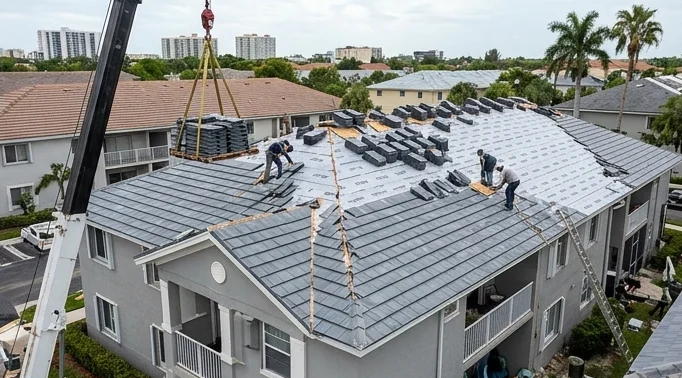
We overlaid the boundaries of fifteen neighborhoods and cities with FEMA's current map and the county's evacuation zones. This is how the risk breaks down:
| Neighborhood | Land in a high-risk zone | Main type of risk | Evacuation zone |
|---|---|---|---|
| Little Havana | 5.9% | Ponding (AH) | E on 87% of the land |
| Wynwood | 6.2% | Ponding (AH) | Outside the zones |
| Coconut Grove | 17.5% | Coastal flooding (AE) and wave action (VE, 6.3%) | A on a third of the land |
| Kendall | 22.0% | Ponding (AH) | D |
| Edgewater | 30.6% | Coastal flooding (AE) and wave action (VE, 2.2%) | C on two thirds of the land |
| Pinecrest | 33.1% | Flooding (AE) and ponding (AH) | C on 83% of the land |
| Coral Gables | 38.7% | Coastal flooding (AE) and wave action (VE, 6.3%) | A on 44% of the land |
| Doral | 40.7% | Ponding (AH) | Three quarters outside the zones |
| Hialeah | 48.5% | Ponding (AH) and flooding (AE) | Almost 80% outside the zones |
| Miami Lakes | 79.1% | Flooding (AE) | Outside the zones |
| Sunny Isles Beach | 83.8% | Coastal flooding (AE) and wave action (VE, 6.6%) | B |
| Brickell | 86.2% | Coastal flooding (AE) and wave action (VE, 9.3%) | B |
| Miami Beach | 95.1% | Coastal flooding (AE) and wave action (VE, 2.2%) | B |
| Aventura | 95.4% | Coastal flooding (AE) | D on 62% of the land and B by the bay |
| Key Biscayne | 100% | Coastal flooding (AE) and wave action (VE, 1.2%) | A |
How to read the table:
- AE: high-risk zone with a base flood elevation; typical along the bay and canals.
- VE: coastal zone with wave action, the most dangerous and expensive to insure.
- AH: shallow ponding zone, typical of the flat western parts of the county after heavy rain.
- Evacuation zone: shows storm surge risk in a hurricane; zone A evacuates first and zone E last.
A neighborhood with little high-risk land does not mean your street won't flood, and vice versa. Always check the exact address on the FEMA flood map. We compare these neighborhoods on every front in our guide to Miami neighborhoods.
How to pay less without being underinsured
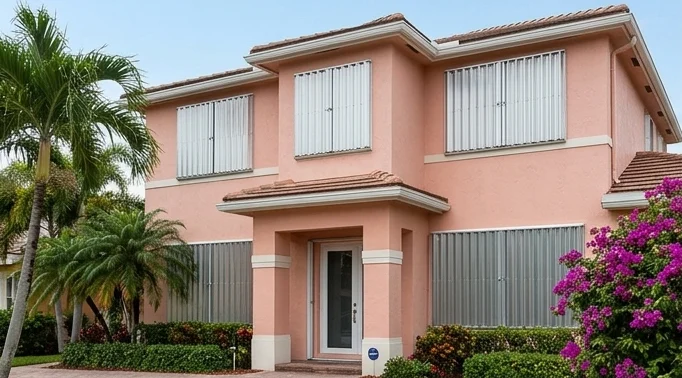
- Wind mitigation inspection: in Florida, insurers must offer discounts for features that reduce wind damage, such as reinforced roofs, shutters or impact windows. An inspection certifies those features.
- My Safe Florida Home: the state program offers free wind mitigation inspections and grants of up to $10,000 to upgrade roofs, windows and doors, depending on the inspection results. Check its website for eligibility and whether funds are available.
- Elevation certificate: for flood insurance, knowing your home's elevation can change the price.
- Deductible: a higher one lowers the premium, but only if you can afford it after a hurricane.
- Compare every year: the Florida market changes a lot; get quotes before each renewal.
How to buy without mistakes
- Before signing a lease or purchase, ask for the flood disclosure required by Florida law: sellers must give it to buyers, and landlords to tenants on leases of one year or longer. We explain it in our guides to buying a home and renting in Miami.
- Get an insurance quote before you commit: in some areas, insurance can completely change the cost of living there.
- Verify the agent's license with the official Florida search and the insurer's with the company registry.
- Check four things in every policy: whether it covers wind, the hurricane deductible, whether flood is included or not, and whether it pays replacement cost or actual cash value, after depreciation.
- Keep copies of the policy and a photo inventory of your belongings outside the home or in the cloud.
If you have questions about an insurer or a claim, the Florida Department of Financial Services helpline is 1-877-693-5236 (1-877-MY-FL-CFO).
FAQ
Does homeowners insurance cover flooding in Florida?
Usually not. Flood is insured separately, through the federal NFIP or a private insurer. Rain entering through a roof broken by wind is usually covered by homeowners insurance, but water rising from outside is flooding.
How long does flood insurance take to start?
Normally 30 days. There is no wait if you buy it when you take out, increase, extend or renew a mortgage.
Is flood insurance mandatory in Miami?
It is if you have a mortgage from a federally regulated or backed lender and the home is in a high-risk zone, and from January 1, 2027 it will be for every Citizens homeowners policy with wind coverage. Otherwise it is voluntary, though highly advisable in much of Miami.
Which Miami neighborhood has the lowest flood risk?
Of the fifteen we analyzed, Little Havana and Wynwood, with about 6% of land in a high-risk zone. Key Biscayne, Aventura and Miami Beach have the highest risk, at 100%, 95.4% and 95.1%.
Do I need insurance if I rent?
The landlord insures the building, but not your belongings or your liability. Many leases require renters insurance, and if you live in a risk zone you can insure your belongings against flooding up to $100,000 through the NFIP.
Method note
This guide summarizes information published by FEMA (NFIP), Citizens Property Insurance Corporation and the Florida Department of Financial Services, consulted in October 2026. The shares of land in high-risk and evacuation zones are our own calculations, overlaying each neighborhood's boundary with FEMA's current flood map and Miami-Dade County's storm surge zones, on land area; each neighborhood guide explains which geography we use. inMiami.ai is not an insurance agent and this guide is not insurance advice: to choose coverage, talk to an agent licensed in Florida.
Sources
- FEMA FloodSmart: Buy a flood insurance policy
- Citizens Property Insurance Corporation: Flood insurance requirement
- Florida Department of Financial Services: Florida's hurricane deductible
- Florida Statutes, section 627.701 (hurricane deductibles)
- My Safe Florida Home
- Florida Department of Financial Services: Purchasing insurance
- Miami-Dade County Open Data: FEMA flood zones and storm surge planning zones
- FEMA: Flood Map Service Center