Coconut Grove is Miami's oldest neighborhood and, for many, its loveliest. Here the city turns green and calm: streets under a canopy of trees, houses tucked into the vegetation, sailboats moored in the bay and a small center where people walk, have coffee and dine outdoors. It has a bohemian soul, Bahamian history and, at the same time, some of the city's best restaurants. Here is what life in the Grove is like and, with official data, what it costs, how its schools perform and what to know about flooding.
What is Coconut Grove like in numbers?
Coconut Grove is a City of Miami neighborhood with no Census boundary of its own, so we use ZIP code 33133, which covers almost all of the Grove and a small strip of Coral Gables (6% of its area). Figures come from the Census Bureau (American Community Survey, 2020-2024 average) unless stated otherwise.
| Figure | Coconut Grove (ZIP 33133) | Miami-Dade |
|---|---|---|
| Population | 36,789 | 2,738,356 |
| Median gross rent per month | $2,068 | $1,829 |
| Median value of owner-occupied homes | $1,022,400 | $463,000 |
| Median household income | $103,420 | $71,753 |
| Households earning over $200,000 a year | 29.6% | 11.6% |
| Owner-occupied households | 52.5% | 52.2% |
| Adults with a bachelor's degree or higher | 64.2% | 34.4% |
| Foreign-born | 41.3% | 54.5% |
| Speak Spanish at home | 50.7% | 66.7% |
| Under 18 | 21.7% | 20.0% |
| People per household | 2.35 | 2.76 |
| Average commute | 27.2 min | 30.9 min |
| Households without a car | 8.7% | 9.8% |
| Single-family homes | 53.5% | 48.7% |
| Median year built | 1977 | 1980 |
| Renters spending over 30% of income on rent | 55.4% | 60.9% |
| Land in a FEMA high-risk flood zone | 17.5% | 33.8% in the City of Miami |
These are five-year medians: current listings usually run higher. We explain each figure in the methodology note.
What is it like to live in Coconut Grove?
The Grove existed before Miami did. In the mid-19th century its first known residents, Ned and Ann Beasley, settled here on the bluffs above Biscayne Bay, and in 1873 the first post office opened under the name "Cocoanut Grove." Many early workers came from the Bahamas and settled around Charles Avenue, in the west of the neighborhood, where Bahamian-style houses can still be seen. In 1925 the City of Miami annexed the Grove, which that same year adopted its current spelling at the suggestion of botanist David Fairchild.
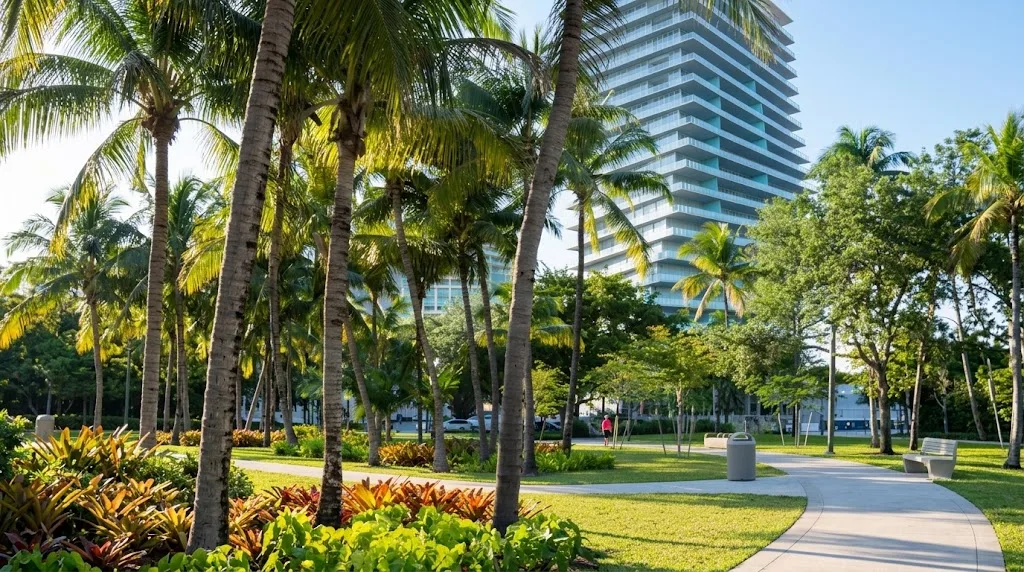
That history shows. The Grove has the feel of a seaside village: narrow streets curving under the trees, homes from different eras hidden behind greenery and a compact center around Main Highway, Grand Avenue and CocoWalk, where you can leave the car and stroll. It has always drawn artists, sailors and people looking for a different pace, and today it sits alongside new buildings by the bay.
Residents are varied: professionals, families with children, retirees and a Bahamian and African American community with very old roots in the West Grove. Half speak Spanish at home, and English is heard more than in other parts of Miami.
What is there to do in Coconut Grove?
Where to eat
The Grove is one of Miami's great dining destinations, with two MICHELIN-starred restaurants:
- Ariete, chef Michael Beltran's restaurant blending contemporary American and classic French cooking, with one MICHELIN star.
- Los Félix, Mexican cooking with indigenous ingredients and modern touches, with one MICHELIN star and a Green Star for sustainable gastronomy.
- Krüs Kitchen, market-driven cooking with sustainable ingredients, also with a Green Star.
Around them, cafés, bakeries and terraces fill the center of the Grove. As always, check the MICHELIN Guide and recent reviews, because the scene changes.
Strolls and the outdoors
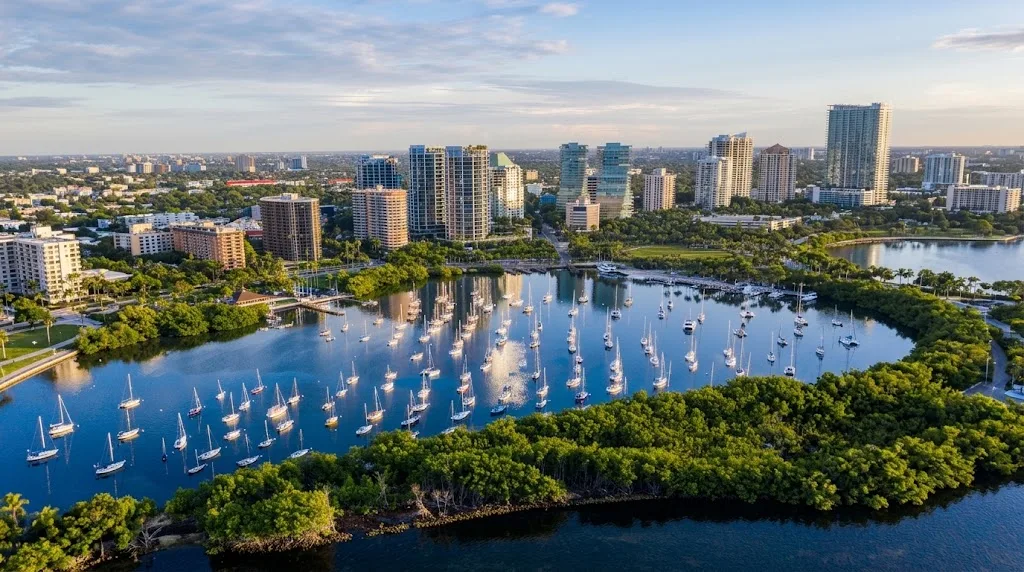
- The bay and Dinner Key: the city's marina, with 587 slips and more than 250 moorings, is, according to the city, the largest wet-slip marina on the U.S. East Coast. Next to it are the historic City Hall, Peacock Park and waterfront paths.
- The Barnacle, a historic state park with the house Ralph Munroe designed in 1891, the oldest home in Miami-Dade still on its original site, in a bayside garden.
- Vizcaya, James Deering's villa and gardens, built between 1914 and 1922 and a National Historic Landmark, at the northern end of the neighborhood.
For the weekend
- The Coconut Grove Arts Festival, one of Miami's best-known art festivals, held every year on Presidents' Day weekend in February along South Bayshore Drive. The 2027 edition runs February 13 to 15.
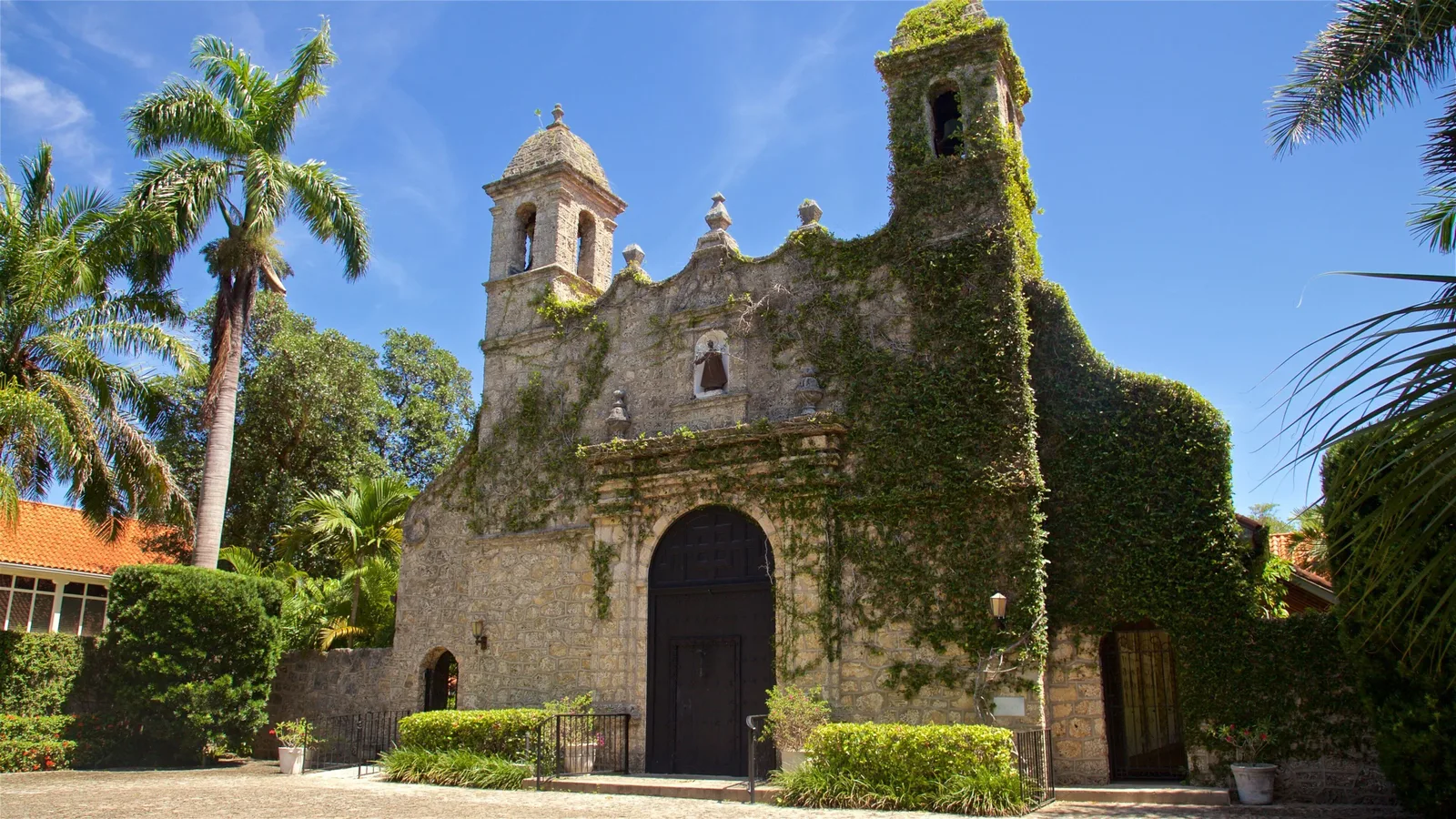
- Plymouth Congregational Church, a 1917 stone church inspired by the old Spanish missions of Mexico, on the National Register of Historic Places since 1974.
- CocoWalk and the center of the Grove, with shops, restaurants and terraces.
How much does it cost to live in Coconut Grove?
The Grove mixes single-family houses, just over half of its homes, with apartment buildings, mostly by the bay and near the center. The housing stock dates from the 1970s, with a median year built of 1977, although historic houses sit alongside recent towers.
- Buying: the median value is over a million dollars, as in Coral Gables. Near the bay, look especially carefully at the flood zone and insurance. Our guide to buying property in Miami can help.
- Renting: the median rent is $2,068 a month, below Coral Gables ($2,373). If you have no credit history, read renting in Miami without a credit history.
Current price: According to Zillow, in September 2026 the typical value of a house in Coconut Grove was $2,011,000 (+12.8% over a year) and of a condo, $1,060,000 (+9.9%). We compare it with other areas, along with rent and flood insurance, in Miami home prices by area, updated every month. Work out what it would cost you to live here →
How good are the schools in Coconut Grove?
ZIP code 33133 has 5 public schools graded by the Florida Department of Education. In 2026, 4 earned an A and 1 a C:
| School | Grades | 2026 grade |
|---|---|---|
| Coconut Grove Elementary | Pre-K to 5 | A |
| Silver Bluff Elementary | Pre-K to 5 | A |
| George Washington Carver Elementary | Pre-K to 5 | A |
| George Washington Carver Middle | 6 to 8 | A |
| Frances S. Tucker Elementary | Pre-K to 8 | C |
The two Carver schools are in the Coral Gables strip included in this ZIP code, on the border with the West Grove, and also appear in our Coral Gables guide. According to the county registry, there are also 3 charter schools and 14 private schools.
How do you get around Coconut Grove?
- On foot and by bike: the center of the Grove is one of the few places in Miami where life happens on foot, and some residents bike between the bay and the center.
- Metrorail: Coconut Grove station, by US-1, connects with Brickell, downtown, Coral Gables and Dadeland.
- Car: most people drive daily; 8.7% of households don't have a car. The average commute is 27 minutes, slightly under the county average.
Is Coconut Grove safe?
According to the FBI, the City of Miami police recorded 358 violent crimes and 2,243 property crimes per 100,000 residents in 2025. The U.S. averages that year were 330 and 1,552. Violent crime is 9% above the national average, and it fell 26% from 2024.
The FBI publishes data by police department, so this is the figure for the whole City of Miami, not just Coconut Grove: the city includes very different areas.
Within each area, risk changes from one street to the next: visit by day and by night before deciding. Compare it with other areas in Miami crime rates by area.
Does Coconut Grove flood?
- Flood zone: according to FEMA's current map, 17.5% of the ZIP code's land is in a high-risk zone, and 6.3% in zone VE, subject to wave action, along the bay. Part of the neighborhood sits on the limestone ridge that forms the old bay bluffs, so the risk depends heavily on the street.
- Hurricane evacuation: 33% of the land is in storm surge zone A, the first to evacuate, along the bay; another 42% in zone B and 25% in zone C.
Before renting or buying, look up the exact address on the FEMA flood map and ask for the flood disclosure required by Florida law.
What are the pros and cons of Coconut Grove?
| Pros | Cons |
|---|---|
| Green, on the bay and full of history | Purchase prices among Miami's highest |
| Two MICHELIN-starred restaurants and terrace life | Evacuation zone A along the bay |
| Walkable center and a Metrorail station | Parking in the center can be difficult |
| Marina, parks and outdoor living | Big contrasts between areas, from waterfront luxury to the West Grove |
| Close to Brickell, Coral Gables and downtown | Some schools with uneven grades |
Who is Coconut Grove right for?
It's a good fit if: you love nature and the sea, want a neighborhood with character and life on foot, enjoy great restaurants, sail or dream of it, and work in Brickell, downtown or Coral Gables.
It may not be for you if: you're looking for affordable housing, want a completely new and uniform neighborhood, need a highly graded school guaranteed near home or prefer to stay away from storm surge risk.
Similar neighborhoods: if you like greenery and architecture but want more houses and good schools, read our Coral Gables guide; if you prefer high-rise, car-free living, the Brickell guide; and if you want the beach, the Miami Beach guide.
Want to compare them all? Read our guide to Miami neighborhoods: where to live based on what you want.
Frequently asked questions
Is Coconut Grove part of Miami?
Yes. It has been a City of Miami neighborhood since 1925, when the city annexed it. Before that it was an independent settlement, the oldest in the area.
How much does it cost to rent in Coconut Grove?
The Census median rent in ZIP code 33133 is $2,068 a month (2020-2024). Current listings usually run higher, especially by the bay.
Which MICHELIN-starred restaurants are in Coconut Grove?
Ariete and Los Félix each hold one MICHELIN star, and Los Félix and Krüs Kitchen also hold a Green Star.
Does Coconut Grove flood?
17.5% of the land is in a FEMA high-risk zone, mostly by the bay, and a third is in evacuation zone A. Higher areas, on the old limestone ridge, carry less risk. Always check the exact address.
Can you live in Coconut Grove without a car?
It's possible near the center and the Metrorail station, although most residents have a car.
Methodology note
Because Coconut Grove has no Census boundary of its own, we use ZIP code 33133 (the Census ZIP Code Tabulation Area), 94% of which lies in the City of Miami and 6% in Coral Gables, according to our overlay of official boundaries. Population, housing, income, language and commuting figures come from the U.S. Census Bureau's American Community Survey (2020-2024 five-year estimates). We calculated the shares of land in flood and evacuation zones ourselves by overlaying that boundary on FEMA's current flood map and the storm surge planning zones published by Miami-Dade County, using land area only. Schools and stations are located using county open data, and school grades are the Florida Department of Education's official 2026 grades.
Sources
- U.S. Census Bureau: American Community Survey 5-year estimates, 2020-2024 (ZCTA 33133, Miami-Dade County)
- Florida Department of Education: 2026 School Grades
- Miami-Dade County Open Data: FEMA flood zones, storm surge planning zones, schools and Metrorail stations
- Florida Division of Historical Resources: Coconut Grove historical marker
- Florida State Parks: History of The Barnacle
- City of Miami: Dinner Key Marina
- Greater Miami Convention & Visitors Bureau: MICHELIN-starred restaurants in Miami
- Coconut Grove Arts Festival: FAQ
- Plymouth Congregational Church (Miami)
- Vizcaya Museum and Gardens
- FEMA: Flood Map Service Center