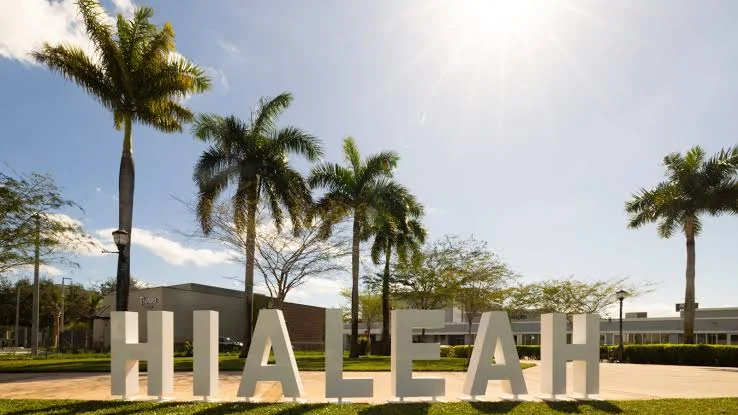
Hialeah is Miami's great Cuban city: more than 226,000 residents, nine in ten speaking Spanish at home and a neighborhood life built around cafés, bakeries, family shops and neighbors who know each other. It has no beach or skyscrapers, but it does have what many newcomers want: rents below the county median, houses with yards and a community that does everything in Spanish. Here is what living in Hialeah is like and, with official data, what it costs, how its schools perform and what to know about flooding.
What is Hialeah like in numbers?
Hialeah is an independent city, the second most populous in Miami-Dade County, so we use its official Census boundary. Figures come from the Census Bureau (American Community Survey, 2020-2024 average) unless otherwise noted.
| Metric | Hialeah | Miami-Dade |
|---|---|---|
| Population | 226,165 | 2,738,356 |
| Residents per km² of land | 4,047 | 557 |
| Median gross rent per month | $1,689 | $1,829 |
| Median value of owner-occupied homes | $392,000 | $463,000 |
| Median household income | $55,594 | $71,753 |
| Owner-occupied households | 46.6% | 52.2% |
| Adults with a bachelor's degree or higher | 22.1% | 34.4% |
| Foreign-born residents | 74.5% | 54.5% |
| Speak Spanish at home | 91.9% | 66.7% |
| Under 18 | 16.8% | 20.0% |
| People per household | 2.91 | 2.76 |
| Average commute | 29.0 min | 30.9 min |
| Households without a car | 9.8% | 9.8% |
| Single-family homes | 47.8% | 48.7% |
| Median year built | 1975 | 1980 |
| Renters spending over 30% of income on rent | 61.5% | 60.9% |
| Land in a high-risk flood zone (FEMA) | 48.5% | 33.8% in the City of Miami |
These are five-year medians: current listings are usually higher. We explain each figure in the method note.
What is it like to live in Hialeah?
Hialeah was born in the 1920s, when aviation pioneer Glenn Curtiss and cattleman James Bright developed the area and built the racetrack. The city was incorporated in 1925, the same year Hialeah Park opened. Its name is usually linked to an expression from Florida's Indigenous peoples meaning "prairie." From the 1960s, the arrival of Cuban exiles transformed it, and today it is one of the most Cuban cities in the U.S.: 74% of the population is of Cuban origin, according to the Census. Its official motto is "the City of Progress."
It is a city of working people and families, with plenty of neighborhood retail, workshops, small businesses and a large industrial area. Almost everything here happens in Spanish, from the doctor to the bank, and it is common for three generations to live close by, sometimes under the same roof: households average almost three people. Three in four residents were born outside the U.S.
It is not a picture-postcard city for strolling, but it works for everyday life: streets of low-rise houses with yards, neighborhood shopping centers, walk-up coffee windows everywhere and good connections to the airport, Doral and downtown Miami.
What is there to do in Hialeah?
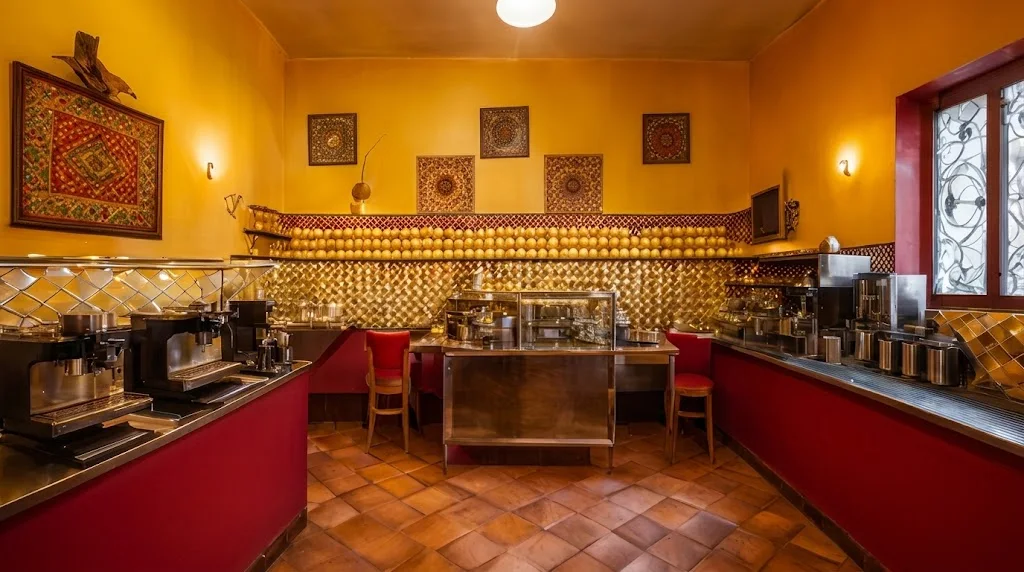
Where to eat
Hialeah is one of the best places in the county for neighborhood Cuban food. Miami's tourism bureau highlights, among others:
- La Viña Aragón, open late and known for its vaca frita with yuca and mojo. Cash only.
- Morro Castle, famous for its fritas, the Cuban-style burger, and churros with hot chocolate.
- Polo Norte, a neighborhood classic since 1992, with Cuban pizza and mamey and guava ice cream.
- Breadman Bakery, for a breakfast of pastelitos and croquetas.
As always, check recent reviews, because things change.
Outdoors and strolling
- Hialeah Park, the 1925 racetrack, on the National Register of Historic Places since 1979. Its flamingo colony, brought from Cuba in 1934, still lives on the infield lake, a National Audubon bird sanctuary. Today it operates as a casino.
- Amelia Earhart Park, a 515-acre county park next to Hialeah, with five lakes, a farm with animals, about 8 miles of mountain bike trails, a dog park and a watersports complex.
- The Leah Arts District, in the east of the city, with more than 30 murals, a sculpture of Don Quixote riding a flamingo and a free open-air art garden.
For the weekend
- McDonald Water Park, a 17-acre water park with a wave pool and lazy river, open April to October.
- Westland Mall, the city's main shopping center since 1971.
- The Milander Center, with free exhibitions, an amphitheater and a rooftop terrace.
How much does it cost to live in Hialeah?
Hialeah mixes single-family houses, almost half of all homes, with duplexes and low-rise apartment buildings, plus some recent towers. The housing stock dates from the 1970s, with a median year built of 1975. Just under half of households own their home.
- Renting: the median rent is $1,689 a month, below the county median. Even so, 61.5% of renters spend more than 30% of their income on rent, because local wages are moderate. Check that the unit you rent is legal and permitted, especially if it is an addition or extension of a house. If you have no credit history, read how to rent in Miami without a credit history.
- Buying: the median value is $392,000, among the most affordable in this series. In older houses, check the roof, wiring and plumbing, because they affect insurance. We explain it in our guide to buying property in Miami.
Current price: According to Zillow, in September 2026 the typical value of a house in Hialeah was $565,000 (+1.2% over a year) and of a condo, $245,000 (−4.4%). We compare it with other areas, along with rent and flood insurance, in Miami home prices by area, updated every month. Work out what it would cost you to live here →
How good are the schools in Hialeah?
Hialeah has 24 public schools graded by the Florida Department of Education. In 2026, 8 earned an A, 12 a B and 4 a C. These are the A-rated schools:
| School | Grades | 2026 grade |
|---|---|---|
| Ernest R. Graham K-8 Center | PK-8 | A |
| West Lakes Preparatory Academy | PK-8 | A |
| Jose Marti MAST 6-12 Academy | 6-12 | A |
| South Hialeah Elementary | PK-5 | A |
| Meadowlane Elementary | PK-5 | A |
| John G. Dupuis Elementary | PK-5 | A |
| Mae M. Walters Elementary | PK-5 | A |
| North Twin Lakes Elementary | PK-5 | A |
The city's three public high schools, Hialeah Senior High, Westland Hialeah Senior High and Hialeah-Miami Lakes Senior High, earned a B, a B and a C, respectively. There are also 8 charter schools, 6 of them graded: 3 rated A and 3 rated B. The county registry lists 124 private centers, many of them daycares.
How do you get around Hialeah?
- Metrorail: the city has three stations, Okeechobee, Hialeah and the Tri-Rail transfer station, connecting to downtown Miami, Brickell and Coral Gables, and to the airport with a transfer.
- Tri-Rail: the commuter train runs north to Fort Lauderdale and West Palm Beach.
- Car: most people drive daily; 9.8% of households have no car, the same as the county. The airport and Doral are close, and the average commute is 29 minutes.
Is Hialeah safe?
According to the FBI, the Hialeah police recorded 173 violent crimes and 1,371 property crimes per 100,000 residents in 2025. The U.S. averages that year were 330 and 1,552. Violent crime is 48% below the national average, and it fell 8% from 2024.
Within each area, risk changes from one street to the next: visit by day and by night before deciding. Compare it with other areas in Miami crime rates by area.
Does Hialeah flood?
- Flood zone: according to FEMA's current map, 48.5% of the land is in a high-risk zone: 36.8% in zone AH, shallow ponding after heavy rain, and 11.7% in zone AE.
- Hurricane evacuation: 78.5% of the land is outside the storm surge zones, and the rest is in zones D and E, the last to evacuate.
The risk here is rain, not the sea. Before renting or buying, look up the exact address on the FEMA flood map and ask for the flood disclosure required by Florida law. We explain how to insure yourself in our guide to home and flood insurance in Miami.
What are the pros and cons of Hialeah?
| Pros | Cons |
|---|---|
| Rent and home prices below the county | Moderate incomes and heavy rent pressure |
| Life in Spanish and a close-knit community | Almost half the land in a ponding zone |
| Metrorail and Tri-Rail within the city | Heavy traffic on the main avenues |
| Close to the airport and Doral | Little green space in the city, apart from the large parks |
| Neighborhood Cuban food | Uneven school grades |
Who is Hialeah right for?
A good fit if: you have just arrived and want moderate rent, want to live in Spanish, have family nearby or want to, work at the airport, in Doral or in the industrial area, or plan to open a small business serving Hispanic customers.
Maybe not for you if: you want the beach, nightlife or an international English-speaking environment, a very green neighborhood or guaranteed A-rated schools close to home.
Similar neighborhoods: if you like living in Spanish but want newer homes and A-rated schools, read our Doral guide; if you would rather be near downtown with low rents, our Little Havana guide; and if you want houses with yards in the southwest, our Kendall guide.
Want to compare them all? Read our guide to Miami neighborhoods: where to live based on what you want.
FAQ
Is Hialeah part of Miami?
No. It has been an independent city since 1925, with its own government, northwest of Miami, in Miami-Dade County. It is the county's second most populous city.
How much does it cost to rent in Hialeah?
The Census median rent is $1,689 a month (2020-2024), below the county median. Current listings are usually higher.
Can you live in Hialeah without speaking English?
Day to day, yes: 92% of residents speak Spanish at home and almost all shops and services work in Spanish. Even so, English will open more job opportunities outside the city.
Does Hialeah flood?
48.5% of the land is in a high-risk zone according to FEMA, mostly from ponding after heavy rain rather than the sea: almost the entire city is outside the hurricane evacuation zones. Always check the exact address.
Is there a train in Hialeah?
Yes. It has three Metrorail stations, connecting to downtown Miami and, with a transfer, to the airport, plus a Tri-Rail connection to Fort Lauderdale and West Palm Beach.
Is Hialeah cheap to live in?
Cheaper than the Miami-Dade average, yes: the median rent is $1,689 a month, compared with $1,829 countywide, and the median home value is $392,000. But wages are moderate too, and 61.5% of renters spend more than 30% of their income on rent.
How much is property tax in Hialeah?
About 18.6 mills at the proposed 2025 rates, or roughly $1,865 a year per $100,000 of taxable value. The city's share is 6.30 mills; the rest goes to the county, schools and other authorities. If it is your primary residence, the homestead exemption takes up to $50,000 off the value.
Are there Colombians and Venezuelans in Hialeah?
Yes, though they are small communities next to the Cuban one, which is 74% of the population. According to the Census, about 3.7% are of Nicaraguan origin, 3.2% Colombian and 3.1% Venezuelan.
Method note
We use the City of Hialeah's official Census boundary. Population, housing, income, language, origin and commuting figures come from the U.S. Census Bureau's American Community Survey (2020-2024 five-year average). Density is our own calculation, on land area. The shares of land in flood and evacuation zones are our own calculations, overlaying that boundary with FEMA's current flood map and the storm surge zones published by Miami-Dade County, on land area. Schools and stations are located using county open data, and school grades are the Florida Department of Education's official 2026 grades. The approximate property tax is our sum of the proposed 2025 rates published by the Miami-Dade Property Appraiser that apply in Hialeah.
Sources
- U.S. Census Bureau: American Community Survey 5-year estimates, 2020-2024 (Hialeah city, Miami-Dade County)
- Florida Department of Education: 2026 School Grades
- Miami-Dade County Open Data: FEMA flood zones, storm surge planning zones, schools and Metrorail stations
- Hialeah, Florida
- Greater Miami Convention & Visitors Bureau: Hialeah insider guide
- WLRN: The flamingos who never left Hialeah (August 21, 2025)
- Amelia Earhart Park
- FEMA: Flood Map Service Center
- Miami-Dade Property Appraiser: 2025 proposed millage rate comparison (PDF)