
In Miami, home insurance is one of the costs that surprises newcomers most: it is far higher than in most of the U.S. and well above Orlando or Tampa. Here is what people actually pay, with official data from Florida’s insurance regulator: the average in Miami-Dade and Broward, how it has changed, flood insurance in each area, what pushes your price up or down, and a tool to work out your own reference figure. We update this page whenever the regulator publishes new data.
Updated: October 2026. OIR averages with data as of March 2026; flood insurance from policies written between October 2025 and September 2026.
This page is about cost. To understand how each policy works (flood, Citizens, the hurricane deductible) and flood risk neighborhood by neighborhood, read our Miami home and flood insurance guide.
How much is home insurance in Miami?
According to the Florida Office of Insurance Regulation (OIR), the state regulator, the average homeowners policy in Miami-Dade County costs $5,975 a year, about $498 a month, when it includes wind coverage, which is what protects you from hurricanes. In Broward County, the average is $6,136. The data is as of March 2026 and covers policies in force at insurers that report to OIR: it is not an advertised price or an estimate from an insurance website.
| Policy | Miami-Dade | Broward |
|---|---|---|
| House, with wind | $5,975 ($498/mo) | $6,136 ($511/mo) |
| House, without wind* | $3,779 ($315/mo) | $3,008 ($251/mo) |
| Condo unit (HO-6), with wind | $2,801 ($233/mo) | $1,816 ($151/mo) |
| Condo unit (HO-6), without wind* | $1,764 ($147/mo) | $1,317 ($110/mo) |
Average annual premium for policies in force as of March 2026. Source: OIR, Property Insurance Stability Report, July 2026. *These are different policies without hurricane coverage: their owners must insure wind separately (Citizens holds 57% of those wind-only policies in Florida), so you cannot subtract one from the other to see what wind costs.
It is an average: it mixes small and large homes, old and new, and policies written years ago with brand-new ones. A large house or one with an old roof can pay much more, and a new, well-protected one much less. Below we explain what drives the price, and there is a tool to work out your own reference figure.
Is Miami more expensive than the rest of Florida?
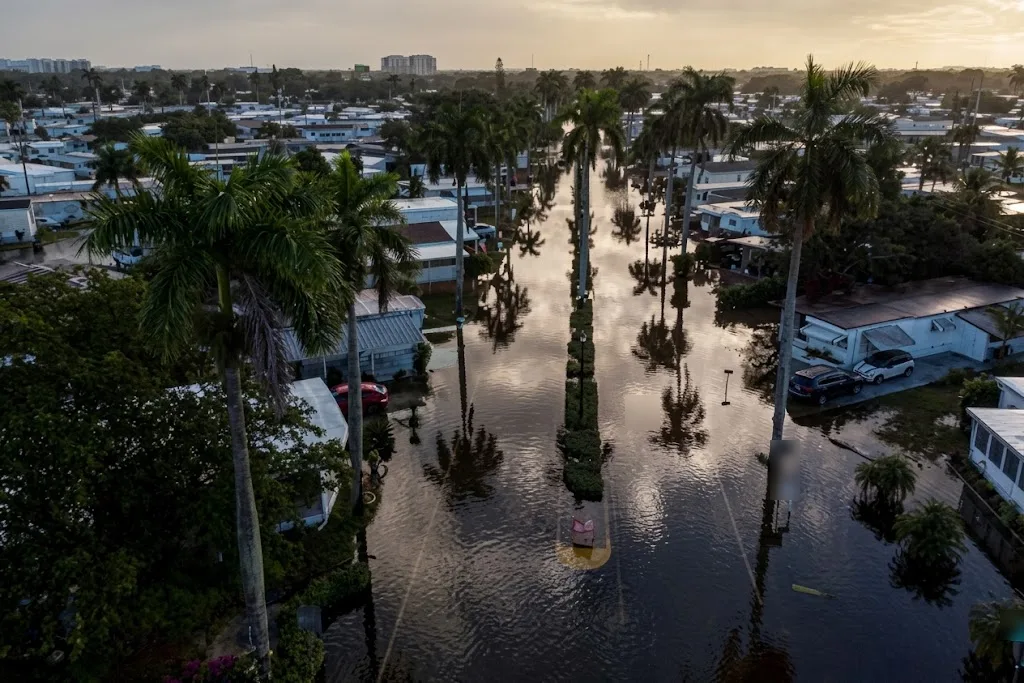
Yes, by a wide margin. Miami-Dade is Florida’s 4th most expensive county for home insurance, and Broward is 3rd. Only the Keys (Monroe) and Palm Beach rank above Broward. Homeowners in Miami-Dade pay $2,365 more a year than in Orlando’s county (Orange) and $2,450 more than in Tampa’s (Hillsborough). For condos the gap is even larger: Miami-Dade unit insurance is the 2nd most expensive in the state.
Is home insurance going up or down?
After several years of steep increases, home insurance in South Florida has stabilized. Under OIR’s current method, the Miami-Dade average was $5,960 in March 2025 and $5,975 in March 2026 (+0.3%); in Broward it went from $6,165 to $6,136 (−0.5%). Under the previous method, averages were already around $6,000 in March 2024. OIR notes that the average with wind fell in 51 of 67 counties since its January report. Keep in mind this is the average of policies in force: if many owners raise their deductibles or trim coverage, the average falls even if a new quote does not.
Source: Florida Office of Insurance Regulation (OIR), market stability reports from July 2024 to July 2026. Each point is the data date. Until January 2025, OIR divided total premium by policies with wind coverage; since July 2025 it uses only those policies’ premium, so the first two points are not fully comparable with the rest.
According to OIR, since the 2022 and 2023 reforms 21 new companies have been approved to write residential policies in Florida, and for policies effective in 2024 or later, 44 companies have asked to lower their rates and another 48 to keep them unchanged. Citizens, the state’s insurer of last resort, has gone from nearly 1.2 million policies at the end of 2022 to 293,465 in June 2026, its lowest level in 25 years. For buyers today, that means more options than three years ago, even though prices are still high.
Why is it so expensive to insure a home in Miami?
Four reasons that add up:
- Hurricanes. All of South Florida is exposed, and wind is the most expensive part of the policy. Insurers also have to buy reinsurance to pay for a major catastrophe, and that cost ends up in your premium.
- Lawsuits. In Miami-Dade, Broward and Palm Beach, 27% of claims closed in 2025 ended in litigation, compared with 9% in the rest of Florida, according to OIR. Every lawsuit makes the system more expensive for everyone.
- The cost of rebuilding. Materials, labor and strict building codes mean repairing a home in Miami costs more than elsewhere.
- Older homes. Half of Miami-Dade’s housing was built before 1980, according to the Census Bureau, long before today’s hurricane standards.
How much does each insurer charge?
OIR publishes in its CHOICES tool what each insurer would charge for three model homes, based on their most recent approved rates. They are not quotes, but they show something no average can: for the same house, one insurer can charge 4 times as much as another. All three homes are concrete block, with a $500 deductible plus a 2% hurricane deductible, and no claims in the past three years.
| Model home | County | Cheapest | Median | Most expensive |
|---|---|---|---|---|
| 2005 house, $300,000 | Miami-Dade | $4,344 | $9,774 | $16,927 |
| 2005 house, $300,000 | Broward | $3,228 | $8,025 | $16,645 |
| 1990 house, $150,000, no wind mitigation | Miami-Dade | $6,309 | $11,750 | $29,600 |
| 1990 house, $150,000, no wind mitigation | Broward | $4,294 | $10,450 | $26,178 |
| Same house, with full wind mitigation | Miami-Dade | $2,829 | $5,656 | $10,078 |
| Same house, with full wind mitigation | Broward | $2,059 | $4,497 | $9,908 |
Annual rate from 19 insurers in each county. Source: OIR, CHOICES tool, accessed October 2026. The 2005 house has only minimum mitigation discounts and no hip roof; the 1990 house has none or all of them. Excludes Citizens and companies that filed their data as trade secrets.
Three takeaways. First, wind protection cuts the price in half: for the 1990 house, going from no mitigation to full mitigation lowers each insurer’s rate by 55% in the typical case in Miami-Dade and 54% in Broward. Second, an old, unprotected $150,000 house costs more to insure ($11,750 median in Miami-Dade) than a 2005 house worth twice as much ($9,774). Third, shopping around pays: for the 2005 house, the cheapest insurer costs more than $4,500 a year less than the median in both counties.
These sample rates are higher than the $5,975 average because the model home has a low deductible and almost no discounts. The full table, for the 2005 house:
| Insurer | Miami-Dade | Broward |
|---|---|---|
| Florida Farm Bureau* | $4,344 | $4,425 |
| Castle Key | $4,575 | $3,228 |
| USAA* | $5,129 | $5,073 |
| State Farm Florida | $5,880 | $5,807 |
| USAA Casualty* | $6,591 | $6,599 |
| Universal | $7,145 | $5,830 |
| Homeowners Choice | $7,439 | $5,645 |
| Cypress | $8,081 | $8,245 |
| Heritage | $8,916 | $7,506 |
| TypTap | $9,774 | $7,710 |
| Monarch National | $10,402 | $8,884 |
| Southern Oak | $11,138 | $8,025 |
| American Strategic | $11,384 | $9,437 |
| Security First | $11,489 | $11,676 |
| ASI Preferred | $12,479 | $11,312 |
| Auto Club of Florida | $13,560 | $12,798 |
| Manatee Exchange | $13,592 | $9,562 |
| People's Trust | $15,229 | $11,376 |
| Slide | $16,927 | $16,645 |
Sample annual rate for a 2005 concrete-block house with a $300,000 replacement cost, sorted from lowest to highest in Miami-Dade. *USAA only insures military members, veterans and their families, and Florida Farm Bureau requires membership. An approved rate does not mean the company is taking new customers in your area or for your home. inMiami.ai does not recommend any insurer or receive payments from them. Source: OIR, CHOICES (October 2026).
How much does it cost in each area?
The regulator does not publish homeowners insurance prices by neighborhood, so treat the exact ZIP-code figures you will see on other websites with caution. What does change from one area to another, and can be measured with official data, is what moves the price most: the home’s value, its age and flood risk. The table brings these together for the 21 areas we follow.
| Area | Typical house | Homes built before 1980 | Homes built 2000 or later | Of houses with a flood policy, % in a high-risk zone* | Flood insurance on a house per year |
|---|---|---|---|---|---|
| City of Miami | |||||
| Brickell | — | 10% | 74% | — | — |
| Downtown | — | 5% | 85% | — | — |
| Edgewater and Wynwood | $854,000 | 25% | 66% | 77% | $1,170 |
| Upper East Side | $1,443,000 | 64% | 20% | 95% | $1,639 |
| Coconut Grove | $2,011,000 | 54% | 25% | 40% | $1,489 |
| Little Havana | $605,000 | 75% | 13% | 67% | $1,104 |
| South and west Miami-Dade | |||||
| Coral Gables | $2,097,000 | 61% | 26% | 54% | $1,484 |
| Pinecrest | $2,492,000 | 70% | 13% | 72% | $2,277 |
| Palmetto Bay | $1,142,000 | 64% | 16% | 87% | $2,514 |
| Kendall | $835,000 | 55% | 9% | 90% | $968 |
| Doral | $682,000 | 6% | 64% | 68% | $673 |
| North Miami-Dade | |||||
| Hialeah | $565,000 | 60% | 11% | 96% | $592 |
| Miami Lakes | $733,000 | 31% | 27% | 99% | $552 |
| Aventura | $636,000 | 26% | 25% | 99% | $1,034 |
| Beaches and islands | |||||
| Sunny Isles Beach | $1,397,000 | 47% | 31% | 100% | $3,461 |
| Miami Beach | $2,457,000 | 67% | 15% | 100% | $3,737 |
| Surfside and Bal Harbour | $1,580,000 | 60% | 17% | 100% | $4,020 |
| Key Biscayne | $4,137,000 | 59% | 13% | 100% | $4,629 |
| Broward County | |||||
| Weston | $802,000 | 7% | 25% | 10% | $760 |
| Fort Lauderdale | $587,000 | 65% | 24% | 87% | $1,267 |
| Hollywood | $511,000 | 75% | 10% | 89% | $1,084 |
| Counties | |||||
| Miami-Dade County | $599,000 | 50% | 24% | — | — |
| Broward County | $535,000 | 50% | 18% | — | — |
Typical house: Zillow value (ZHVI), September 2026. Age: Census Bureau, ACS 2020-2024, all housing units in the city or, for City of Miami neighborhoods, in their main ZIP code. Flood: our median of the total cost of federal (NFIP) policies on single-family houses written between October 2025 and September 2026, and the share of them in a FEMA high-risk zone, from OpenFEMA. *This is a share of houses that carry flood insurance, not of all houses: in high-risk zones it is mandatory with a mortgage, so those houses weigh more. "—": few single-family houses in the area or too few policies. Sources do not always use the same geography: for Kendall, the Census uses the Kendall CDP and flood data four ZIP codes; for Surfside, flood data for ZIP 33154 includes Bal Harbour and Bay Harbor Islands; for Edgewater and Wynwood, the Census uses 33137 only.
Three useful takeaways. First, the newest areas, such as Downtown, Brickell and Edgewater and Wynwood, have most of their homes built to current standards. They are mostly condos, so the benefit goes mainly to the building’s insurance and, with it, the condo fee. Second, in Little Havana, Hollywood and Pinecrest, about seven in ten homes predate 1980: before buying, look closely at the roof and windows. Third, on the islands and the beach, flood insurance soars: in Key Biscayne the median policy costs $4,629 a year, compared with $552 in Miami Lakes.
Work out the reference figure for your home
Choose your area and type of home. We give you the official reference figure (the county average and, for houses, the area’s median flood policy) and what, given your home, could make you pay more or less. It is not a quote: for that you need a licensed agent.
What pushes your price up or down?
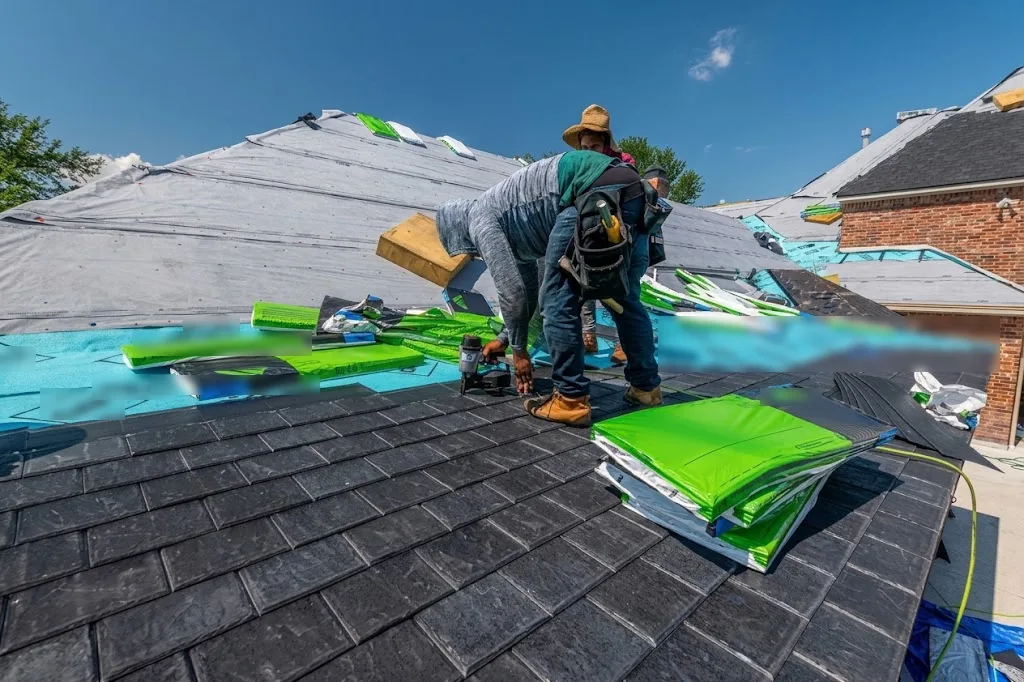
Every insurer has its own rates, but in Florida almost all of them look at the same things:
- The roof. It is the first thing they check. Florida law bars insurers from refusing or not renewing coverage solely because of the roof’s age if it is under 15 years old. If it is 15 or older, before requiring a replacement they must let you get an inspection, at your expense, and if the inspector certifies at least 5 years of useful life left, they cannot refuse coverage solely because of its age. Even so, an old roof usually makes the policy more expensive.
- Wind protection. Shutters, impact windows and doors, the shape of the roof and how it is tied to the walls. The law requires insurers to offer discounts for these features, which are documented with a wind mitigation inspection on the official form OIR-B1-1802, updated in April 2026.
- Year built. After Hurricane Andrew (1992), South Florida toughened its standards, and the Florida Building Code has applied since 2002. Newer homes usually pay less for wind.
- Replacement cost. Not the market price, but what it would cost to rebuild the house. The higher it is, the more the policy costs.
- The hurricane deductible. In general, insurers must offer $500, 2%, 5% or 10% of the dwelling coverage, with exceptions based on value. It applies once per calendar year, not per hurricane. A higher one lowers the premium, but you will have to pay it yourself if a hurricane hits.
- Your history. Claims in recent years and, at many companies, your credit history.
- How the home is used. If it is your primary residence, you buy a homeowners policy (HO-3). If you buy it to rent out, you need a dwelling policy (DP-3), which usually costs more and does not qualify for homestead or My Safe Florida Home grants.
Two tips for buyers: get coverage bound before closing, because the lender will require it, and do not leave it to the last minute in hurricane season, because insurers stop writing new policies when a storm threatens the area. And ask the seller for the four-point inspection, the wind mitigation report and the permit for the latest roof: they will save you time.
How to pay less
- Get a wind mitigation inspection. An authorized inspector carries it out, and it is how you get discounts for the protection your home already has. If you are buying, get it before closing: it can change the price a lot.
- See whether you qualify for My Safe Florida Home. The state program offers free wind mitigation inspections and grants of up to $10,000 to strengthen roofs, windows and doors: the state puts in $2 for every $1 of yours, or the full grant if your income is low. It is for single-family homes that are your primary residence, with the homestead exemption, and for the grant, built before 2008 and insured for $700,000 or less. It depends on state funding, gives priority to certain groups, and you cannot start work before the grant is approved. If you just bought, note that homestead requires owning and living in the home on January 1, with the application due by March 1.
- Shop around every year. The market is changing and new companies are entering. An independent agent can compare several for you, and OIR has an official tool, CHOICES, that shows sample rates by county.
- Adjust the deductible. Only raise it if you have that money saved for after a hurricane.
- Citizens, as a last resort. If no private company will insure you at a reasonable price, Citizens is the state-backed insurer. It will not accept or renew you if a private insurer offers comparable coverage for no more than 20% above its price, Citizens also already requires flood insurance if your home is in a high-risk zone or its replacement cost is $400,000 or more, and from January 1, 2027 it will require it on all its homeowners policies with wind. As a rule, it does not insure homes with a replacement cost of $700,000 or more. We explain it in our home and flood insurance guide.
Want to compare home insurance prices?
Leave your details and we will let you know as soon as we can connect you with independent, Florida-licensed insurance agents who work in Spanish and English and compare several insurers for you. It is free and there is no obligation.
What if I buy a condo or rent?
If you buy a condo, the building’s association insures the structure and common areas and pays for it through the condo fee. You buy insurance for your unit (HO-6), which covers the interior, your belongings and your liability. In Miami-Dade it averages $2,801 a year, and in Broward $1,816. Before buying, ask the association for its policy and whether any special assessments are approved or planned: since the 2022 condo safety law, many buildings have raised them.
If you rent, renters insurance (HO-4) covers your belongings and your liability, not the building. It usually costs a fraction of a homeowners policy, and many landlords require it in the lease. We cover what else landlords ask for in our guide to renting in Miami without a credit history.
An example: a house in Kendall
To see how insurance fits into the total cost of living in each area, with mortgage, taxes and flood insurance, use our cost of living calculator. And if you are comparing areas before buying, check home prices by area and the salary needed to live in Miami.
Frequently asked questions
How much does home insurance cost in Miami?
The average in Miami-Dade County is $5,975 a year, about $498 a month, for policies that include wind, according to OIR (March 2026). In Broward, $6,136. Flood insurance is separate.
How much does condo insurance cost in Miami?
Unit insurance (HO-6) averages $2,801 a year in Miami-Dade and $1,816 in Broward. On top of that, you pay your share of the building’s insurance through the condo fee.
Is home insurance getting cheaper in Florida?
In South Florida it has stabilized: on the same method, the Miami-Dade average was $5,960 in March 2025 and $5,975 in March 2026. Twenty-one new insurers have been approved since the 2022 and 2023 reforms, and many have asked to lower rates.
Does home insurance cover flooding?
No. Homeowners policies do not cover flooding. You buy it separately, from the federal program (NFIP) or a private insurer. The federal policy has a 30-day wait, unless you buy it when closing on a mortgage. If you are buying, ask whether you can take over the seller’s policy: NFIP policies can be transferred to the buyer, and a new one is priced at the full-risk rate.
Is home insurance mandatory in Florida?
The law does not require it, but if you have a mortgage, the lender will, and if the home is in a high-risk flood zone, flood insurance too: almost every mortgage requires it.
Which insurer is cheapest in Miami?
It depends on your home, but in OIR’s official CHOICES tool, for a 2005, $300,000 house in Miami-Dade, approved rates range from $4,344 to $16,927 a year. Some of the cheapest only insure certain groups or are not taking new customers everywhere, so compare real quotes.
What is a wind mitigation inspection?
A review of your home’s wind protection (roof, tie-downs, shutters, impact windows) on the official form OIR-B1-1802. Florida insurers must offer discounts for those features, and the inspection is how you document them.
How often is this data updated?
Homeowners insurance averages twice a year, when OIR publishes its January and July reports. Flood insurance and home values every month.
Sources and method
Homeowners and condo insurance averages come from the Property Insurance Stability Reports of the Florida Office of Insurance Regulation (OIR), published every January and July. OIR calculates them by dividing total premium by policies in force in each county, separately for policies with and without wind coverage; we use those that include wind. The historical series combines the reports from July 2024 to July 2026; until January 2025, OIR published a single average per county. Data on litigation, Citizens and new companies is from the July 2026 report. Rates by insurer come from OIR’s CHOICES tool, which uses each company’s most recent approved rates to price three model homes; we accessed it in October 2026. Flood insurance is our median of the total cost of NFIP policies on single-family houses, from OpenFEMA’s redacted data. Housing age is from the Census Bureau’s ACS 2020-2024, and home values from Zillow’s ZHVI. We do not publish a homeowners insurance price by neighborhood because no reliable official data exists at that level. This is general information, not a quote or insurance advice: the actual price depends on your home and on each insurer.
Sources
- Florida Office of Insurance Regulation: Property Insurance Stability Report, July 2026 (PDF)
- Florida Office of Insurance Regulation: Property Insurance Stability Report, January 2026 (PDF)
- Florida Office of Insurance Regulation: Property Insurance Stability Report, July 2025 (PDF)
- Florida Office of Insurance Regulation: Property Insurance Stability Report, January 2025 (PDF)
- Florida Office of Insurance Regulation: Property Insurance Stability Report, July 2024 (PDF)
- Florida Office of Insurance Regulation: Wind mitigation resources and form OIR-B1-1802
- Florida Office of Insurance Regulation: CHOICES homeowners rate comparison tool
- Citizens Property Insurance: New-business eligibility rule increases to 20% (December 2022)
- Citizens Property Insurance Corporation: Flood insurance requirement
- Florida Statutes, section 627.7011 (homeowners policies, roof age)
- Florida Statutes, section 627.0629 (windstorm mitigation discounts)
- Florida Statutes, section 627.701 (hurricane deductibles)
- Florida Statutes, section 627.351 (Citizens Property Insurance eligibility)
- My Safe Florida Home: Frequently asked questions (eligibility and grants)
- WLRN: My Safe Florida Home reopens with $352M in funds and new eligibility requirements (August 2025)
- OpenFEMA: FIMA NFIP Redacted Policies (data.gov catalog)
- U.S. Census Bureau: ACS 5-year estimates (2020-2024), table B25034, year structure built
- Zillow Research: Housing data (ZHVI)